
Bearing Steel Balls: 2026 Material & Process Upgrade for Precision Bearings
2026-01-30
Bearing Steel Balls: 2026 Material & Process Upgrade for Precision Bearings
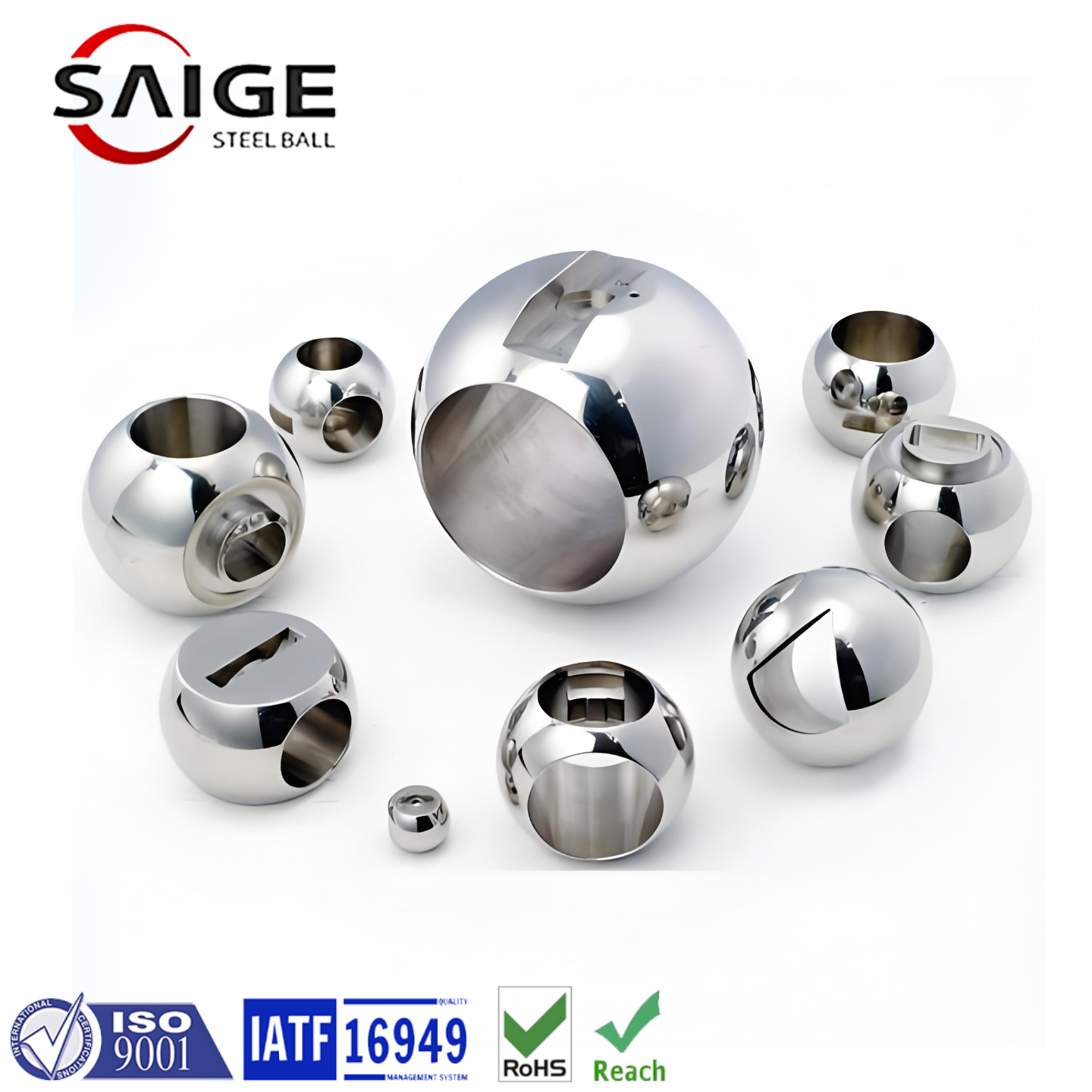
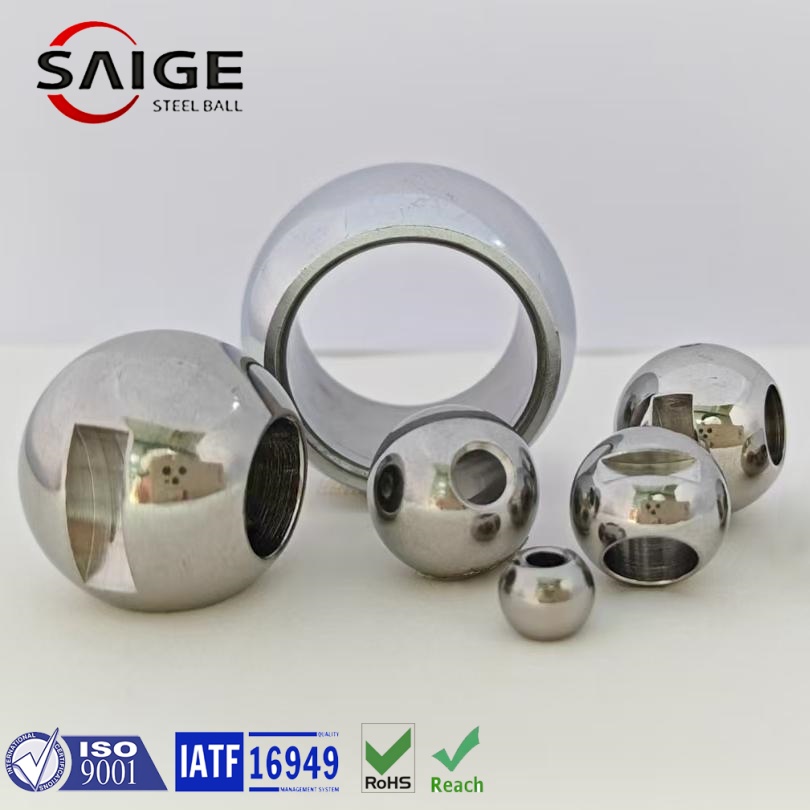
Bearing steel balls, the core force-transmitting components of bearings, refer to precision parts made of bearing-specific alloy steel through cutting-edge processes, rather than performance upgrades of ordinary steel balls. In 2026, mainstream bearing steel balls adopt GCr15 high-carbon chromium steel, SUJ2 Japanese standard steel and upgraded G20CrNi2MoA carburized bearing steel as core materials, manufactured via nano-scale surface coating, intelligent temperature-controlled heat treatment, ultra-precision grinding and triple full-inspection processes. Tailor-made for high-frequency, low-noise and high-precision scenarios such as robot joints and high-end machine tools, they are the core carrier for bearings to achieve performance breakthroughs.
The iterative upgrade of bearing steel materials is the key to the leap in steel ball performance, with three major highlights in material advantages in 2026: First, excellent composition and purity. The carbon content is precisely controlled at 0.98%-1.03%, combined with nickel and molybdenum alloys to strengthen the matrix. Through double vacuum degassing + electric arc remelting process, the non-metallic inclusion content is ≤7ppm, particle size ≤18μm, and material uniformity reaches 99%, 30% lower than that of conventional materials in 2025. Second, balanced strength, toughness and wear resistance. After intelligent isothermal quenching, the surface hardness is stably 63-65HRC, core impact toughness ≥29J/cm², and with nano-ceramic coating (thickness 0.004-0.006mm), the wear resistance is 90% higher than that of ordinary bearing steel balls. Third, iterative fatigue resistance. The uniformity of matrix crystallization is optimized, capable of withstanding 1.5×10⁸ cyclic loads without damage, 40% higher than traditional materials.
When applied to bearings, the upgraded bearing steel balls can accurately solve core pain points in high-end scenarios: First, extremely low friction and noise reduction. The friction coefficient is as low as 0.0012 (industry average 0.0018), and after 1000 hours of operation of robot joint bearings, the radial runout only increases by 0.002mm, with noise controlled below 36 decibels. Second, extending bearing service life. In automotive wheel hub bearings, the L10 life (10% failure probability) is increased by 48%, extending the service life from 80,000 km to 165,000 km; in wind power bearings, the replacement frequency is reduced by 55%, and the annual operation and maintenance cost is saved by 48%. Third, wide working condition adaptation. It can withstand extreme temperature differences from -65℃ to 165℃, adapting to high-speed scenarios of 6500 rpm and heavy-load scenarios of 220kN.
Feige Steel Ball has simultaneously upgraded the 2026 bearing steel ball production line, covering product specifications from 0.8mm to 25.4mm, with 38 tons of stock for mainstream specifications. Equipped with 60 high-precision photoelectric sorters and intelligent spectrum detectors, the full inspection accuracy reaches 99.99%. With an annual output of 2300 tons and dual-system certification, it serves 85 bearing enterprises, with a 93% repurchase rate among robot field customers, becoming a core supplier of high-end bearing steel balls in 2026.


Chrome Steel Balls: 2026 Material & Process Upgrade for Industrial Wear Resistance
Bearing Steel Balls: High-Quality Materials for All-Scenario Bearing Adaptation