
316/316L Stainless Steel Grades by Country
author: P
2026-04-28
316/316L Stainless Steel Grades by Country
316/316L stainless steel, as a core category of the austenitic stainless steel family, is widely used in chemical industry, food processing, marine engineering, precision machinery, steel ball manufacturing and many other fields due to its excellent corrosion resistance, oxidation resistance and processing performance. Among them, the carbon content of 316 stainless steel is up to 0.08%, and the carbon content of 316L (where "L" stands for low carbon) is strictly limited to less than 0.03%. The two are suitable for different working conditions and are indispensable key raw materials in industrial production.
In global trade and raw material procurement, different countries have obvious differences in the grade naming of 316/316L stainless steel. Only clear corresponding results are presented to facilitate industry practitioners to quickly check and directly apply. The specific correspondences are as follows: China: 316 (06Cr17Ni12Mo2), 316L (022Cr17Ni12Mo2); United States: 316 (S31600), 316L (S31603); Germany: 316 (1.4401), 316L (1.4404); Japan: 316 (SUS316), 316L (SUS316L); France: 316 (Z6CND17-12), 316L (Z2CND17-12); United Kingdom: 316 (316S31), 316L (316S11); Italy: 316 (X5CrNiMo17-12-2), 316L (X2CrNiMo17-12-2); Russia: 316 (08X17H13M2), 316L (03X17H13M2).
In 2026, with the further standardization of global stainless steel industry standards, mastering the corresponding relationship of 316/316L stainless steel grades in various countries has become the key to avoiding procurement confusion, ensuring product quality and improving foreign trade efficiency. This type of stainless steel, due to its molybdenum content, has outstanding resistance to chloride corrosion, and can be adapted to the production of various products such as precision steel balls, chemical equipment and food processing machinery. The standardized correspondence of its grades in various countries is directly related to the accuracy of raw material procurement and product compliance.
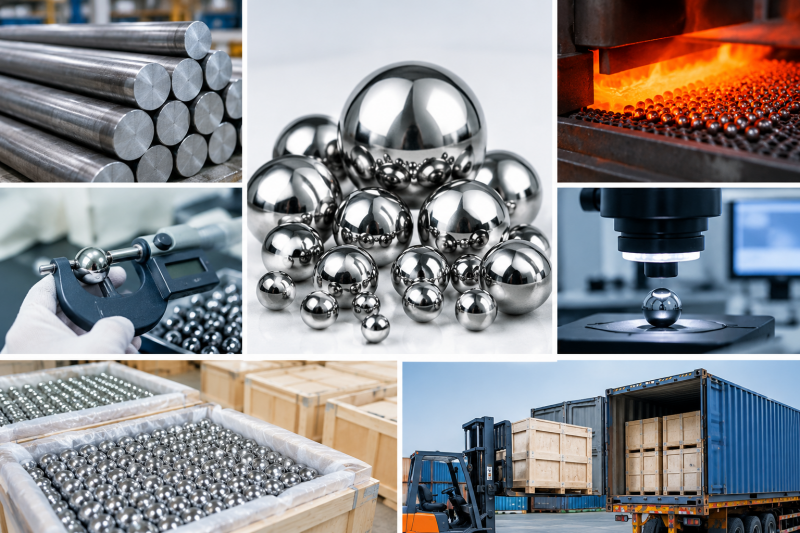
As a national high-tech source enterprise, Feige Steel Ball has been deeply engaged in the field of stainless steel ball production, accurately grasping the latest 2026 standards and grade correspondences of 316/316L stainless steel in various countries. It has established a complete raw material spectral detection system, which can accurately identify 316/316L stainless steel of various national grades, ensuring that the produced stainless steel ball materials are fully consistent with customer requirements. The company has obtained IATF16949, ISO9001 and ISO45001 certifications, with traceable raw materials, providing reliable product support for global customers and helping the industry carry out standardized procurement and efficient production.
| country | standard system | 316 stainless steel grade | 316L stainless steel grade |
| China | GB/T 20878 | 06Cr17Ni12Mo2 | 022Cr17Ni12Mo2 |
| USA | ASTM A240 | 316(S31600) | 316L(S31603) |
| Germany | DIN EN | 1.4401 | 1.4404 |
| Russia | GOST 5632 | 08X17H13M2 | 03X17H13M2 |
| Japan | JIS G4305 | SUS316 | SUS316L |
| France | NF EN | Z6CND17-12 | Z2CND17-12 |
| Britain | BS EN | 316S31 | 316S11 |
| Italy | UNI EN | X5CrNiMo17-12-2 | X2CrNiMo17-12-2 |
Labor Creates Value, Craft Defines Excellence – 2026 International Workers’ Day Special
Chromium Steel Grades by Country