
What Factors Affect the Service Life of Chrome Steel Balls?
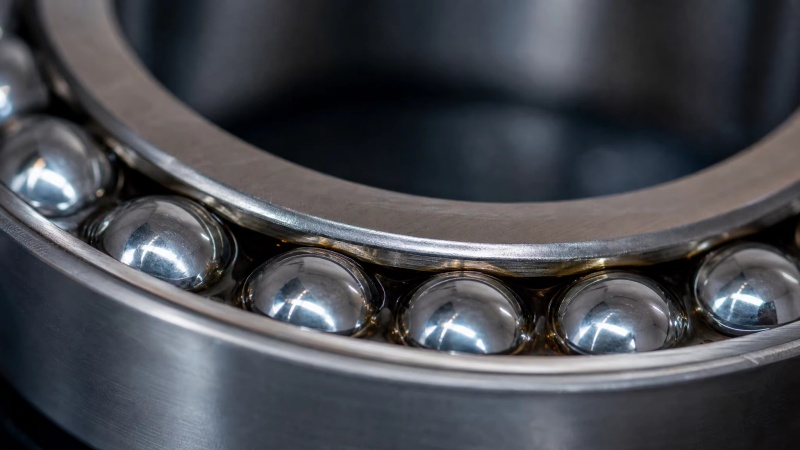
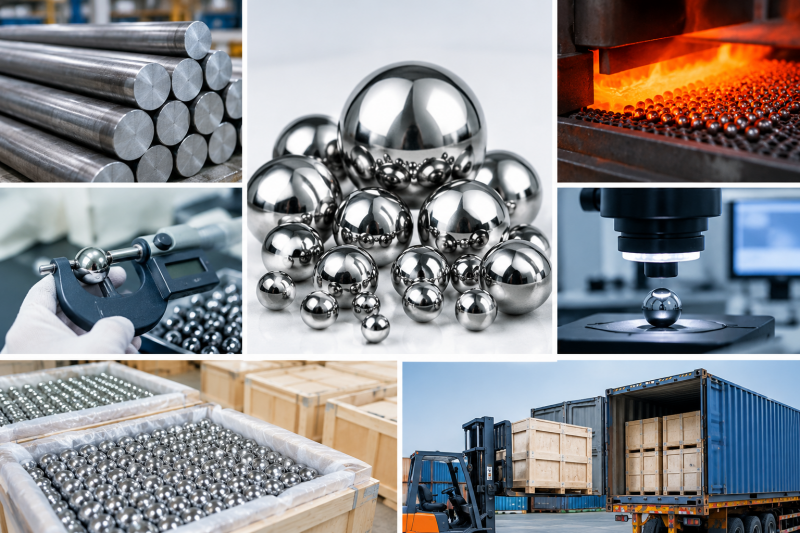
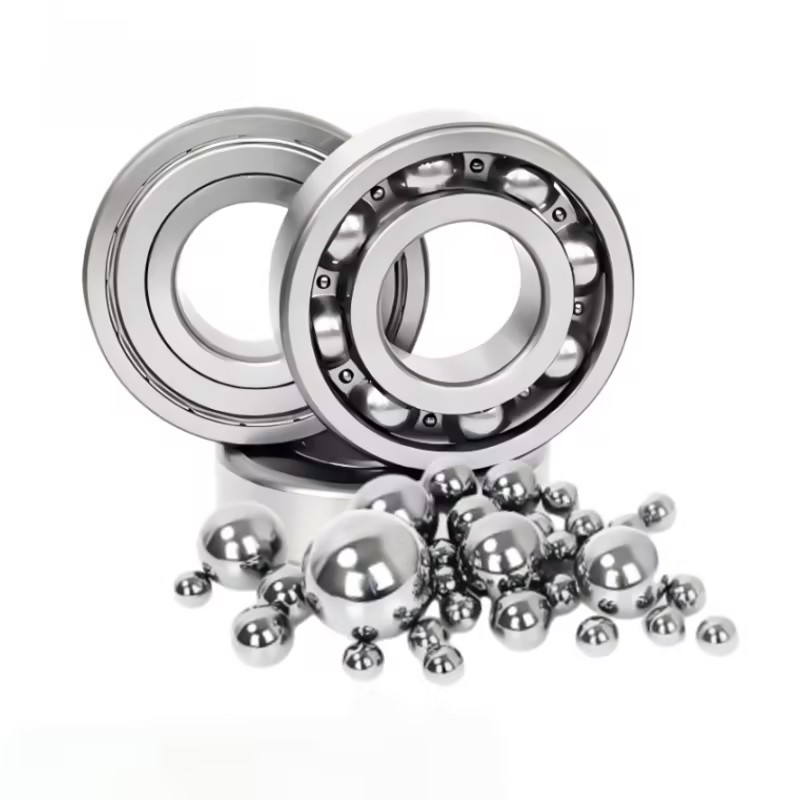
Chrome steel balls are widely used in precision bearings, automotive components, industrial machinery, and other applications requiring high hardness, wear resistance, and reliable rolling performance. However, their service life can vary significantly depending on material quality, manufacturing processes, operating conditions, and maintenance practices.
Understanding the key factors that affect chrome steel ball service life helps manufacturers, engineers, and purchasing professionals select the right products, improve equipment reliability, and reduce long-term operating costs.
1. Material Quality and Metallurgical Purity
Material quality is one of the most important factors affecting the durability of chrome steel balls. High-carbon chromium bearing steel, such as GCr15 or AISI 52100, is commonly used because of its high hardness, strength, and fatigue resistance when properly processed.
However, non-metallic inclusions, internal porosity, and other metallurgical defects can create potential crack initiation points under repeated contact stress. These defects may accelerate rolling contact fatigue and lead to premature surface spalling.
To improve service life, manufacturers should prioritize high-quality raw materials, consistent chemical composition, and effective control of internal defects.
2. Heat Treatment and Hardness
Heat treatment plays a critical role in determining the mechanical properties and fatigue performance of chrome steel balls. Proper quenching and tempering help achieve the required hardness, microstructure, and dimensional stability.
Insufficient hardness may increase wear and permanent deformation, while improper heat treatment can result in excessive brittleness, residual stress, or quenching cracks.
Important quality control parameters include:
-
Surface and core hardness, where applicable
-
Microstructural uniformity
-
Retained austenite content
-
Decarburization depth
-
Residual stress and dimensional stability
A well-controlled heat treatment process helps ensure consistent performance under demanding operating conditions.
3. Surface Finish and Dimensional Accuracy
Surface quality directly influences friction, lubrication performance, and contact stress distribution. Scratches, pits, grinding burns, and microscopic cracks can become initiation points for wear or fatigue damage.
Dimensional accuracy is equally important. Variations in ball diameter, out-of-roundness, or excessive surface waviness can cause uneven load distribution within a bearing assembly.
Precision grinding and lapping processes help achieve the required surface finish and geometric accuracy. For applications involving high rotational speeds or tight tolerances, selecting the appropriate ball grade is essential.
4. Operating Load and Contact Stress
Operating load is another major factor affecting the service life of chrome steel balls. Excessive loads increase contact stress between the balls and raceways, potentially accelerating fatigue damage.
Shock loads, vibration, misalignment, and uneven load distribution can further increase localized stress. Even high-quality steel balls may experience premature failure when operating conditions exceed the design limits of the bearing system.
To extend service life, engineers should evaluate actual operating loads, rotational speeds, impact conditions, and bearing design parameters during product selection.
5. Lubrication Conditions
Effective lubrication reduces friction, limits direct metal-to-metal contact, and helps control operating temperature.
Inadequate lubrication, unsuitable lubricant viscosity, lubricant degradation, or insufficient lubricant supply can increase friction and wear. Under severe conditions, the resulting heat and surface damage may accelerate bearing failure.
To maintain reliable performance, users should:
-
Select lubricants suitable for the operating temperature and load.
-
Maintain an appropriate lubricant supply.
-
Follow recommended lubrication intervals.
-
Monitor lubricant condition and contamination.
-
Avoid mixing incompatible lubricants.
Proper lubrication is essential for maximizing the performance of chrome steel balls in demanding applications.
6. Contamination and Corrosion
Dust, metal particles, moisture, and corrosive substances can significantly reduce bearing life. Hard contaminants may create indentations on rolling surfaces, increasing local stress and promoting fatigue damage.
Moisture and corrosive environments can also cause rust and surface pitting. Once surface damage develops, rolling contact fatigue may progress more rapidly.
Effective sealing, clean assembly practices, appropriate corrosion protection, and regular lubricant inspection can help reduce these risks.
7. Installation and Assembly Accuracy
Even precisely manufactured chrome steel balls can fail prematurely if the bearing assembly is improperly installed.
Misalignment, excessive preload, unsuitable internal clearance, and careless handling may create abnormal contact conditions. Impact during installation can also damage ball surfaces or raceways before the equipment begins operating.
Following the bearing manufacturer's installation instructions, using suitable tools, and maintaining proper alignment and fit are important steps toward achieving the expected service life.
8. Operating Temperature and Maintenance
Temperature affects both lubricant performance and bearing material stability. Excessive heat may reduce lubricant effectiveness and, under sufficiently severe conditions, affect material hardness or microstructure.
High temperatures can result from overloading, inadequate lubrication, excessive friction, or unsuitable operating conditions.
Routine monitoring of temperature, vibration, noise, and lubricant condition helps identify developing problems before they lead to serious equipment damage.
How to Extend the Service Life of Chrome Steel Balls
Extending service life requires a combination of reliable manufacturing quality and proper operating practices.
Here are five practical recommendations:
-
Choose quality materials: Select chrome steel balls manufactured from suitable bearing steel with controlled metallurgical quality.
-
Verify heat treatment: Check hardness, microstructure, and other relevant quality parameters against application requirements.
-
Specify the correct precision grade: Ensure ball diameter tolerance, sphericity, and surface finish meet the requirements of the bearing system.
-
Maintain proper lubrication and cleanliness: Prevent lubricant starvation and minimize contamination.
-
Control operating conditions: Avoid excessive loads, abnormal vibration, misalignment, and overheating.
For critical applications, failure analysis and routine condition monitoring can help identify the root causes of premature wear or fatigue failure.
Why Quality Matters When Selecting Chrome Steel Balls
Chrome steel ball performance depends on more than hardness alone. Material purity, heat treatment, surface integrity, dimensional accuracy, and consistency between production batches all contribute to reliable operation.
When evaluating suppliers, buyers should consider product specifications, quality inspection procedures, manufacturing consistency, and the supplier's ability to meet application-specific requirements.
Selecting the right chrome steel balls can help improve bearing reliability, reduce unplanned downtime, and support long-term equipment performance.
Conclusion
The service life of chrome steel balls is influenced by several interconnected factors, including material quality, heat treatment, surface finish, operating load, lubrication, contamination, installation, and temperature.
By controlling manufacturing quality and maintaining suitable operating conditions, businesses can reduce premature failures and improve the reliability of bearing systems.
Whether used in industrial machinery, automotive components, or precision bearing applications, choosing chrome steel balls that meet the required technical specifications is an important step toward achieving consistent performance and long service life.
Looking for reliable chrome steel balls for your application? Contact our team to discuss your requirements for ball diameter, precision grade, hardness, material specifications, and application conditions. We can help you identify a suitable solution for your industrial needs.
How to Source Chrome Steel Balls from China: A Buyer's Guide
Demand for Precision Rolling Elements Continues to Grow in EV Motor and Machine Tool Spindle Applications