
440C Stainless Steel Ball: Operation Principle
author: P
2026-03-24
440C Stainless Steel Ball: Operation Principle
In aerospace, medical devices, high-end valves and other precision fields, 440C stainless steel balls have become the key core components to ensure the long-term stable operation of equipment, with their core advantages of high hardness, strong rust resistance and ultra-smoothness. As a benchmark material of high-carbon martensitic stainless steel, the operation principle of 440C stainless steel balls combines the coordination of material characteristics and precision craftsmanship, but it has long been simplified by traditional interpretation modes, failing to fully show its technical value. In 2026, based on the core strength of precision steel ball manufacturing, combined with the latest vacuum induction melting (VIM) + electroslag remelting (ESR) double process and the latest GB/T 4340.1-2024 hardness test standard, Feige breaks away from the old knowledge framework and originally disassembles its operation logic with "material empowerment, precision transmission and global protection" as the core. It not only demonstrates professional precipitation, but also allows industry partners to clearly understand the underlying support of its characteristics such as smoothness, safety and rust resistance, creating comprehensive and novel content for interpreting the principle.
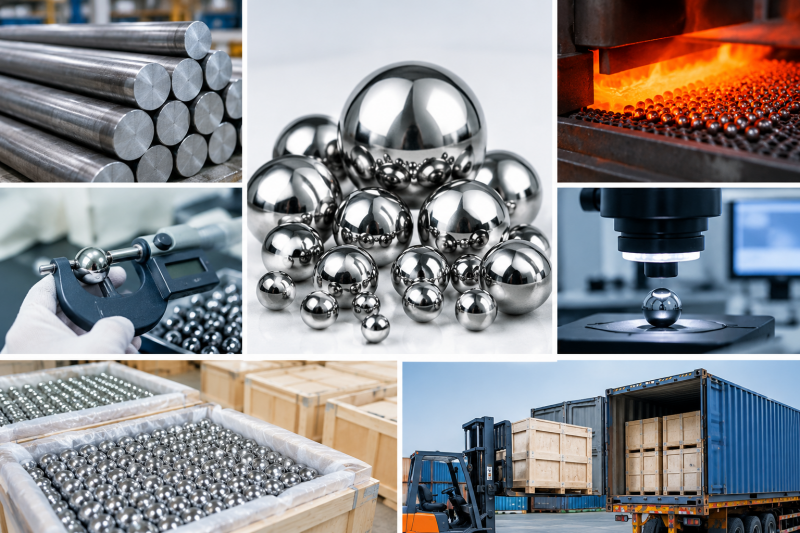
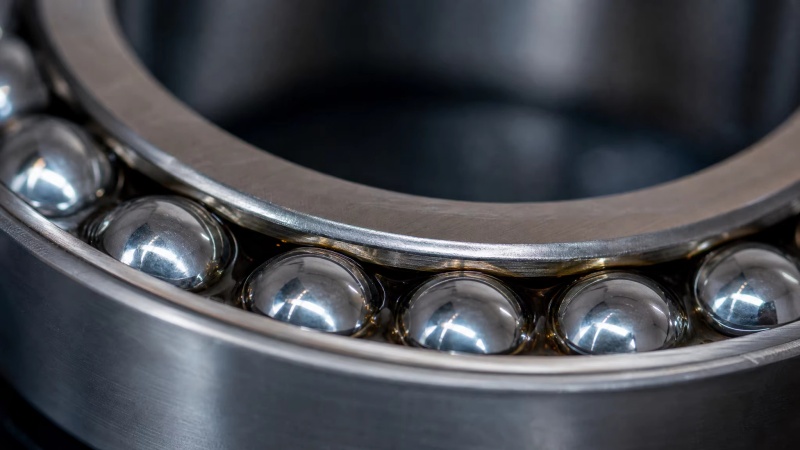
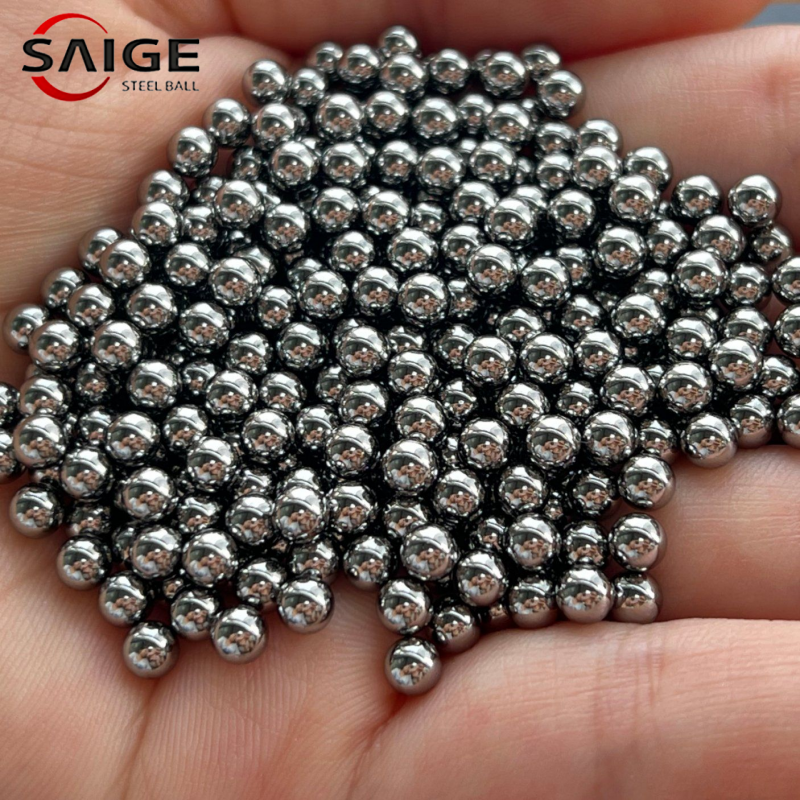
The core operation principle of 440C stainless steel balls is essentially the "triple coordination of efficient power transmission, long-term protection and safe adaptation relying on high-purity materials and precision processing technology", which runs through three core links, highlighting its essential difference from ordinary stainless steel balls. Different from conventional stainless steel balls, 440C stainless steel balls have a carbon content of 0.95%-1.20% and a chromium content of 16.00%-18.00%. After customized vacuum quenching and low-temperature tempering by Feige, the hardness is stably maintained at HRC58-65, and the oxygen content is controlled below 8ppm, laying a solid foundation for operational stability. The first link is precision transmission. When the equipment drive component drives the steel ball to operate, relying on Feige's AI intelligent ultra-precision grinding technology, the roundness error of the steel ball is controlled within 0.0005mm, the surface roughness reaches Ra0.01μm, and the friction resistance is reduced to the lowest level in the industry, realizing smooth operation without jamming and low noise, completely solving the industry pain points of ordinary steel balls being prone to jamming and fast wear, and adapting to high-speed operation of high-end equipment scenarios.
The second link is global rust-proof protection. The surface of 440C stainless steel balls is treated with professional passivation + ion nitriding composite treatment to form a dense protective layer. Combined with the high chromium characteristics of the material itself, it can resist the erosion of humidity, mild acid-base media and chlorides, pass the 5% salt spray test for 72 hours without rust, far exceeding the conventional industry standard of 48 hours, and avoid the impact of material oxidation on transmission accuracy, adapting to complex industrial environments. The third link is safe adaptation. Feige 440C stainless steel balls strictly comply with the dual standards of JIS G4303-2016 and GB/T 4340.1-2024, and achieve full-process control through spectral analysis, metallographic testing, hardness testing and other methods, with no harmful substances precipitated and excellent biocompatibility, adapting to high-end scenarios such as medical devices and food processing. At the same time, its high hardness can withstand high-load operation, avoiding fracture and deformation, and ensuring the safety of equipment operation.
As a powerful enterprise deeply engaged in precision steel ball manufacturing, Feige has broken through the industry bottlenecks of complex heat treatment of 440C stainless steel balls, such as easy cracking and difficult precision control. Relying on the 99.99% product qualification rate and full-specification customization capacity, it can provide full-specification products from 2mm to 80mm, adapting to multiple scenarios such as valves, bearings and precision instruments. By the first quarter of 2026, the products have served more than 60 high-end manufacturing enterprises around the world, covering aerospace, medical devices and other segmented fields, helping domestic high-end equipment achieve import substitution. In the future, Feige will continue to iterate its craftsmanship, deepen the optimization of operation principles, and empower the high-quality development of the high-end industrial field with more precise and reliable 440C stainless steel balls.

201 Stainless Steel Ball: Operation Principle
Driven by Policies and Raw Materials, 304 Stainless Steel Prices Surge in January 2026, High-End Properties Support Market Demand