
High-Temperature Annealing: Steel Ball Principle & Role
author: P
2026-03-31
High-Temperature Annealing: Steel Ball Principle & Role
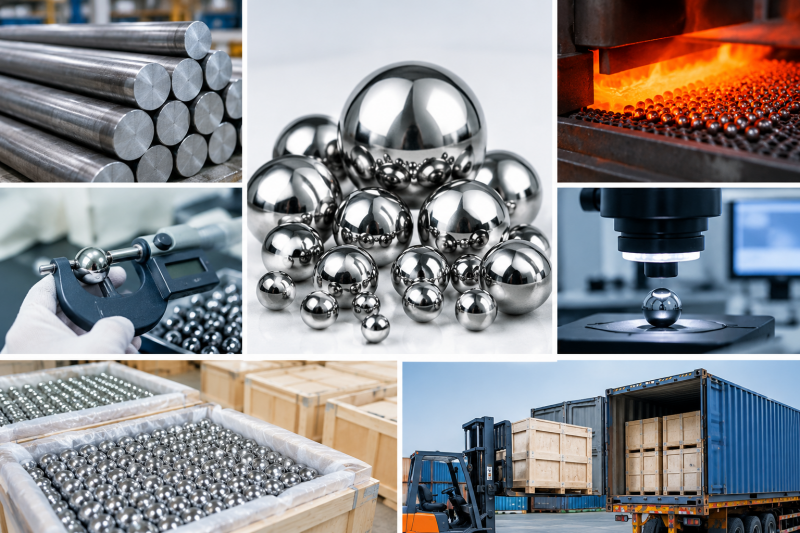
In the entire steel ball manufacturing process, high-temperature annealing is a core heat treatment process that determines the product's mechanical properties and processing stability. Its scientific working mechanism and precise process control directly affect the steel ball's hardness, toughness, surface quality, and subsequent processing adaptability. Different from the extensive operation of traditional annealing processes, the mainstream high-temperature annealing technology in 2026 relies on thermodynamic principles and precision temperature control technology to achieve precise regulation of the internal structure of steel balls, solving the pain points such as easy cracking, uneven hardness, and difficult processing of steel balls in traditional processes. Based on the current cutting-edge steel ball manufacturing technology, this article popularly parses the working mechanism of high-temperature annealing, comprehensively elaborates on its core roles, balances professionalism and readability, provides practical reference for industry practitioners, and objectively presents the technical upgrading and application advantages of the current process.
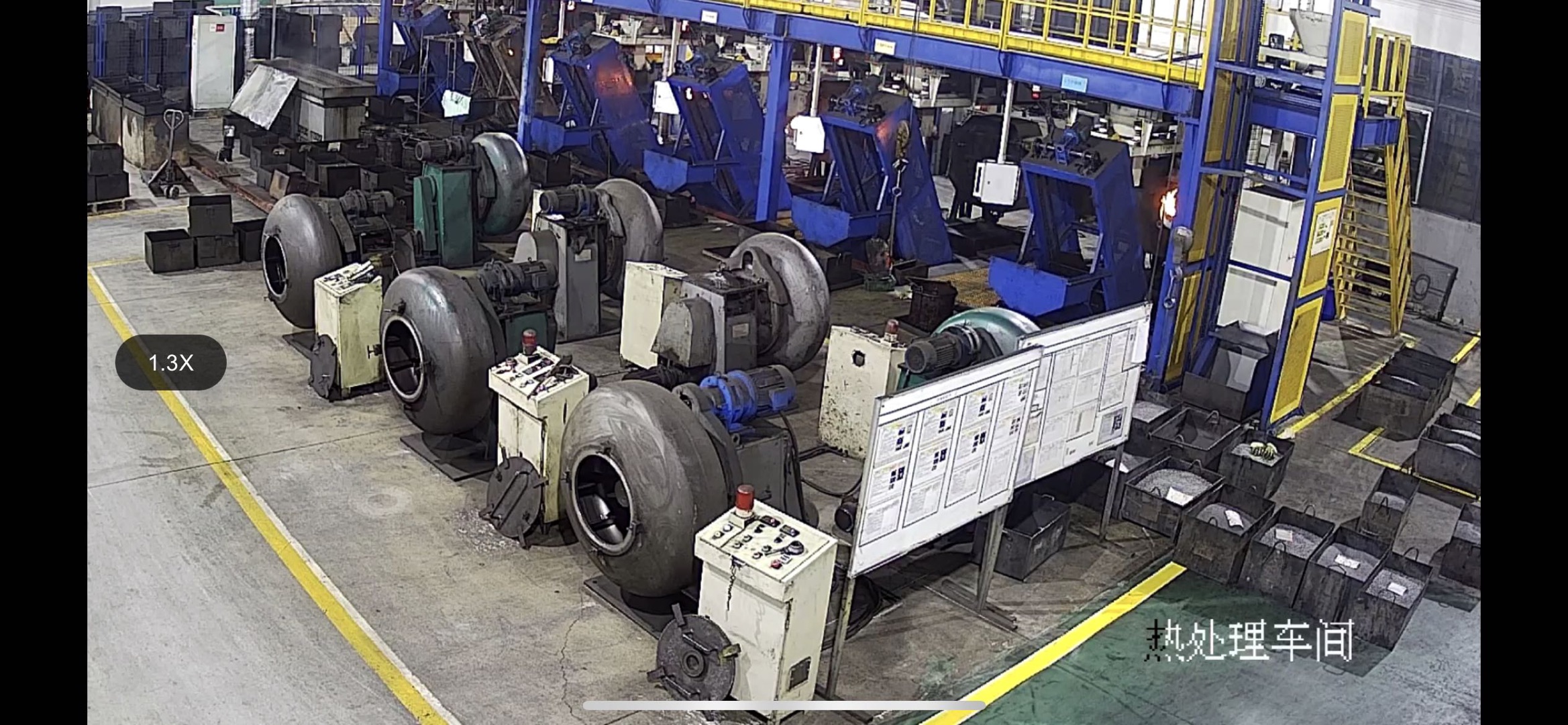
The working mechanism of high-temperature annealing for steel balls is essentially "guiding the diffusion of atoms and structural reconstruction inside the steel ball through precise temperature control and heat preservation to achieve internal stress release and performance optimization". It follows thermodynamic laws throughout and can be divided into three orderly connected stages, with terms interpreted in a popular way to avoid logical confusion. The first stage is the heating stage: the steel balls after cold heading and precision grinding are sent into a controlled atmosphere annealing furnace, and the temperature is uniformly raised to 700-850℃ at a rate of 5-15℃/s (adjusted according to the steel type, such as 780℃ for GCr15 bearing steel). This temperature range is higher than the Ac1 critical point of the steel, prompting the lamellar pearlite inside the steel ball to gradually transform into a uniform austenite structure, laying the foundation for subsequent structural reconstruction.
The second stage is the heat preservation stage: the temperature is stabilized in the set range, and the heat preservation time is adjusted according to the steel ball diameter (30 minutes to 4 hours for 0.3mm-80mm steel balls). The core role is to allow the atoms inside the steel ball to obtain sufficient energy to achieve full diffusion, break the dislocation structure formed during cold processing, eliminate processing internal stress, and at the same time gradually spheroidize and uniformly distribute the carbides in the steel, avoiding stress concentration and cracking during subsequent processing. The third stage is the slow cooling stage: the temperature is slowly cooled at a rate not exceeding 30℃ per hour, so that the austenite structure gradually transforms into stable ferrite and spherical pearlite, preventing defects such as uneven structure refinement and surface oxidation caused by rapid cooling, and ensuring uniform internal structure and stable performance of the steel ball.
The core roles of high-temperature annealing are reflected in four aspects, covering the entire steel ball manufacturing process and subsequent application scenarios: first, releasing internal stress, eliminating residual stress generated during cold heading and precision grinding, reducing the probability of deformation and cracking of steel balls during subsequent processing, and improving product qualification rate; second, optimizing internal structure, spheroidizing carbides uniformly, refining grains, balancing the hardness and toughness of steel balls, and avoiding the problems of being too hard and brittle, or too soft and easy to wear; third, improving processing performance, reducing the hardness of steel balls, facilitating subsequent polishing, grinding and other processes, reducing tool wear, and improving processing efficiency; fourth, improving surface quality, avoiding surface oxidation and black lobes of steel balls through controlled atmosphere protection, and removing residual cutting fluid and oil stains on the surface, laying the foundation for subsequent surface treatment. At present, this process has been widely used in the manufacture of various steel balls such as 201 and 440C, becoming the core support for high-end steel balls to achieve precise performance.


Three-Pin Gauge: Precision Inspection for Steel Balls
201 Stainless Steel Ball: Operation Principle