
Steel Ball Crush Test: Principle & Precision Assurance
author: P
2026-05-12
Steel Ball Crush Test: Principle & Precision Assurance
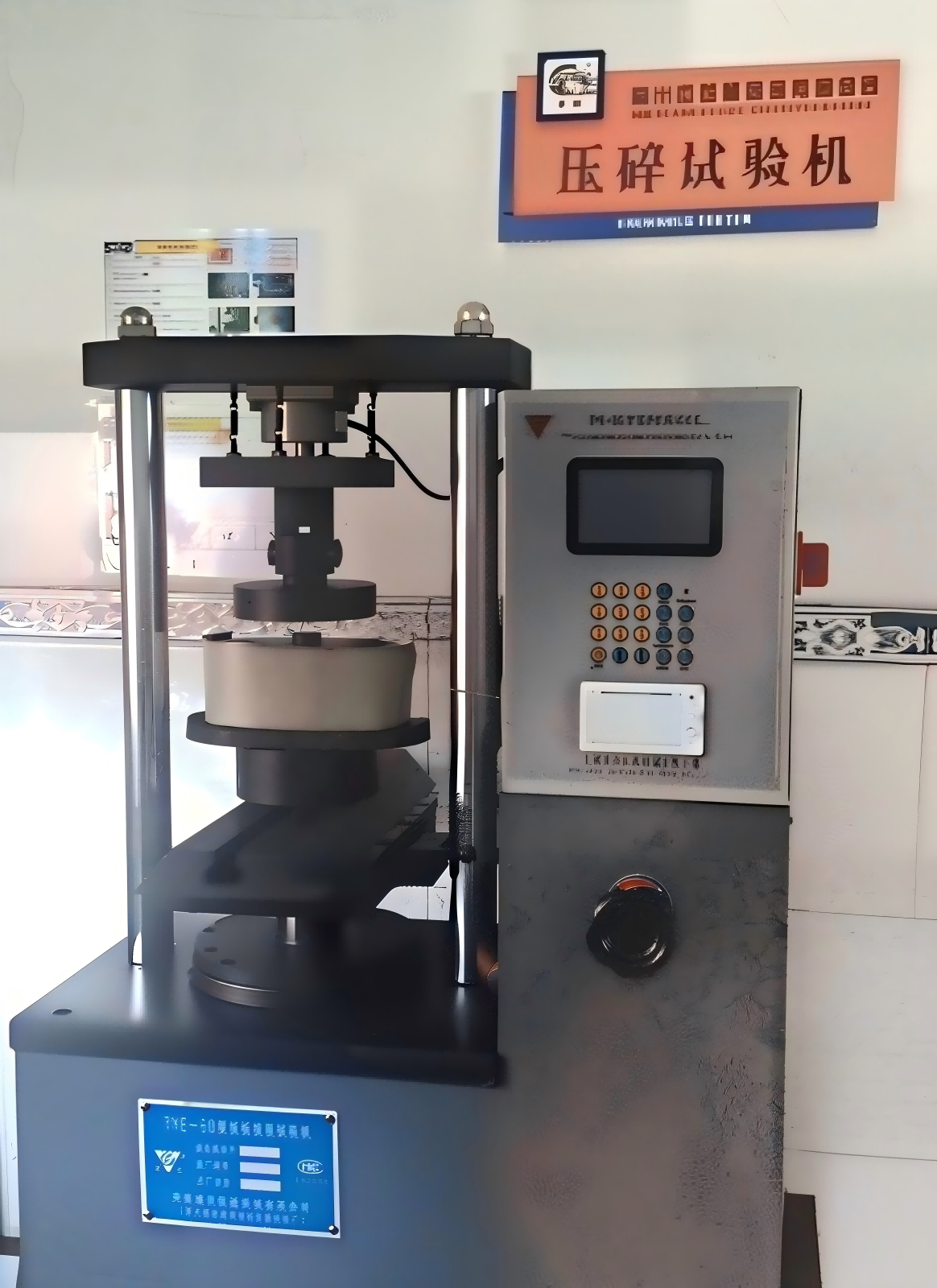
In precision steel ball manufacturing, the crush tester is the core equipment for verifying mechanical properties and heat treatment quality, directly determining the operational reliability of steel balls in bearings, precision machinery and high‑end equipment. Its testing principle is based on three‑point force simulation and mechanical stability after high‑temperature annealing, accurately reflecting internal structure, hardness uniformity and fracture resistance. It is a mandatory test for high‑precision steel balls before delivery.
The technical principle of the crush test is clear and controllable: a set of three steel balls of the same specification is placed in a standard V‑shaped fixture. The upper and lower balls act as supports, while the middle ball bears point‑contact load, simulating the contact stress state during actual bearing operation. The loading system applies axial pressure at a constant rate (≈50N/s) until the steel ball fractures. The system records maximum crush load, force‑displacement curve and deformation in real time with an accuracy of ±1%. This process accurately identifies hidden defects such as quenching cracks, insufficient tempering and inclusions, preventing non‑conforming products from entering the market.
High‑temperature annealing is a key pre‑process for steel balls to achieve stable performance, and its mechanism directly affects crush test results: after quenching, steel balls have residual stress and distorted lattices. High‑temperature annealing (750–950℃) drives lattice recovery, recrystallization and grain homogenization through atomic diffusion, gradually eliminating internal stress and refining martensite structure. This stabilizes hardness at HRC60–65 while improving toughness and fatigue resistance. Annealed steel balls have a uniform and dense internal structure with significantly reduced crush load dispersion, ensuring consistent load‑bearing capacity and precision stability for every ball.
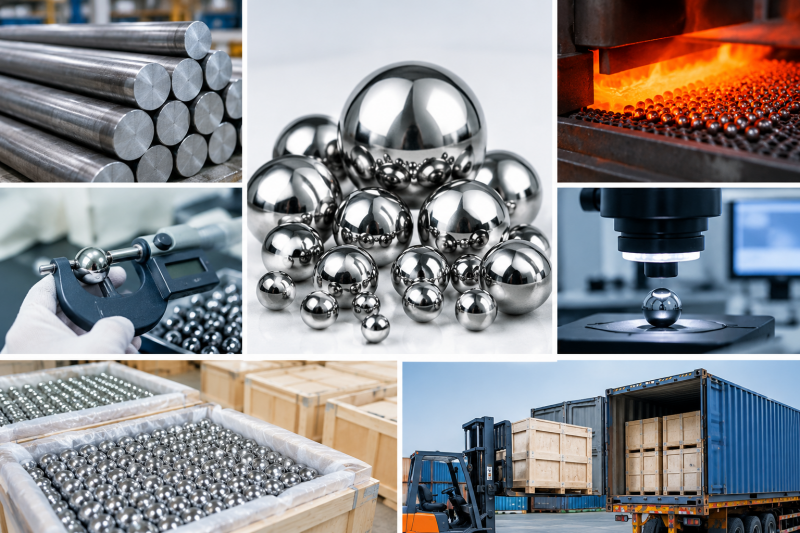
High precision is the core value of precision steel balls. Qualified products must meet: diameter tolerance ±0.001mm, roundness ≤0.0005mm, surface roughness Ra ≤0.05μm, and crush load ≥35kN. As a high‑tech enterprise, we are equipped with fully automatic closed‑loop control crush testers and strictly comply with ISO 3290 and GB/T 308 standards. We have established a full‑process traceability system from raw material spectral inspection and precision heat treatment to final crush testing. Every steel ball undergoes rigorous mechanical verification to ensure micron‑level precision and long‑term reliability, suitable for high‑speed bearings, precision instruments, medical devices and other high‑end applications.
The crush test is not only a quality inspection method but also a reflection of precision manufacturing strength. It quantitatively verifies the effect of high‑temperature annealing and the comprehensive performance of steel balls, providing reliable quality assurance for global customers. In the future, we will continue to optimize testing technology and heat treatment processes, defining precision steel ball quality with higher standards and supporting the upgrading of high‑end equipment manufacturing.


Cold Heading Steel Balls: Manufacturing, Applications & Advantages
Carbon Steel Grades Worldwide