
Salt Spray Test: Verify Steel Ball Corrosion Resistance
author: P
2026-05-28
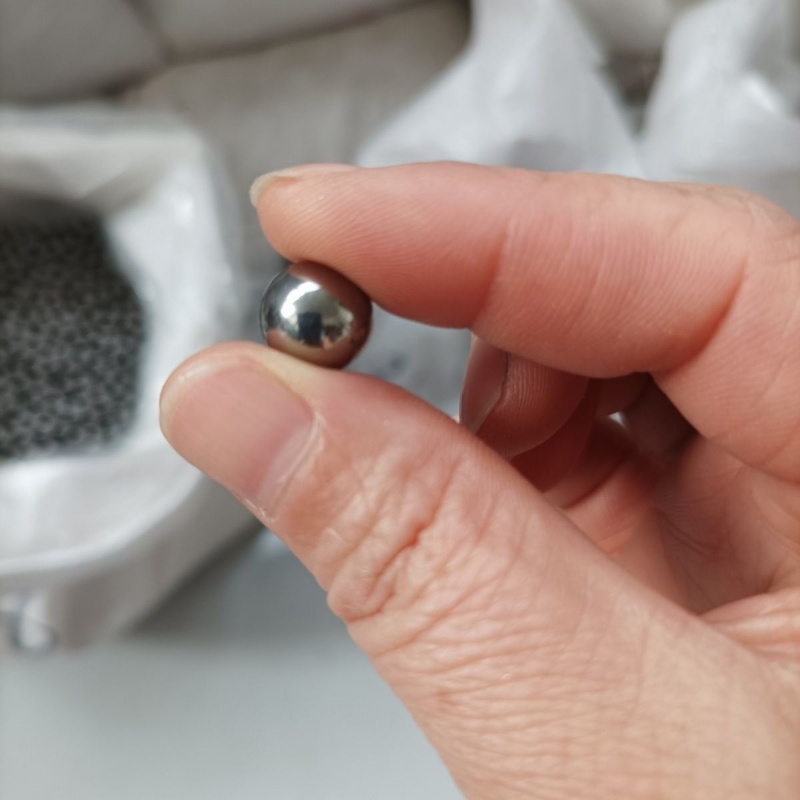
Salt Spray Test: Verify Steel Ball Corrosion Resistance
In the quality inspection system of precision steel balls, the salt spray test is an authoritative core item for verifying the corrosion resistance and rust resistance of products. It is also an important standard to distinguish ordinary steel balls from high-end industrial steel balls. For harsh application scenarios such as coastal areas, humid environments, salt-containing working conditions and outdoor industries, conventional appearance inspection cannot predict the long-term anti-rust stability of steel balls. As a standardized and advanced testing method widely adopted in the 2026 precision parts industry, the salt spray test can simulate harsh working conditions through artificial acceleration and accurately evaluate the durability of steel balls.
The steel ball salt spray test adopts fixed and standardized testing parameters, ensuring authoritative and credible test results. Conducted in a professional laboratory, the test uses 5% concentration neutral salt water solution and continuously sprays steel ball samples at a constant temperature of 35℃. The continuous salt spray erosion accelerates the whole process of salt corrosion and wet oxidation in the natural environment. Compared with the slow corrosion changes that take months or even years in natural conditions, this test can intuitively reflect the anti-rust ability, surface stability and corrosion resistance limit of steel balls in a short time, providing accurate data support for product grade classification and working condition adaptation.
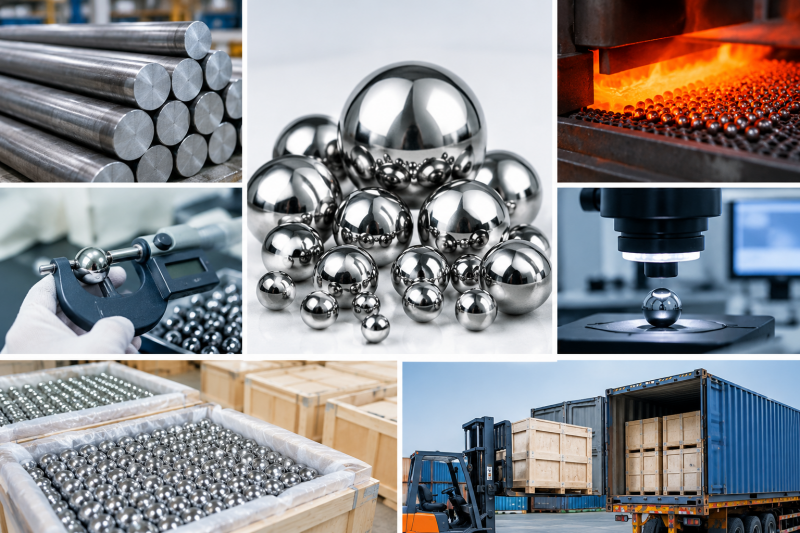
The corrosion resistance of steel balls is fundamentally determined by the stability of the internal structure, which is closely related to the high-temperature annealing process. Our factory adopts a precise temperature-controlled annealing process at 750-950℃. Through constant temperature heat preservation and uniform cooling, it eliminates the residual stress generated during cold processing, reconstructs and homogenizes the internal grain structure, and forms a dense and stable steel ball matrix. This process reduces internal micro defects of the material, avoids local rust and corrosion problems in salt spray environment, and greatly improves the basic anti-corrosion performance of steel balls.
Feige Steel Ball has built a standardized professional salt spray testing laboratory with complete automatic testing equipment, capable of independently completing corrosion resistance inspection for all types of steel balls. We strictly implement industry standards, adopt unified 5% salt water and 35℃ constant temperature parameters for testing, and formulate differentiated testing duration and judgment standards for carbon steel, bearing steel and stainless steel balls. Every batch of products will undergo strict salt spray sampling inspection to ensure stable anti-corrosion performance before delivery.
As a key barrier for steel ball quality control, the salt spray test guarantees the adaptability of products in harsh working conditions. Supported by mature high-temperature annealing technology and standardized salt spray testing system, Feige Steel Ball realizes full-process quality control from internal material optimization to external performance verification, and provides high-stability precision steel balls for global industrial manufacturing.


Steel Ball Roughness: Definition, Test and GB Standard
Expand SE Asia Layout, Attend Thailand Manufacturing Expo