
Material Comparison: 304 vs 304L Stainless Steel
author: P
2026-07-24
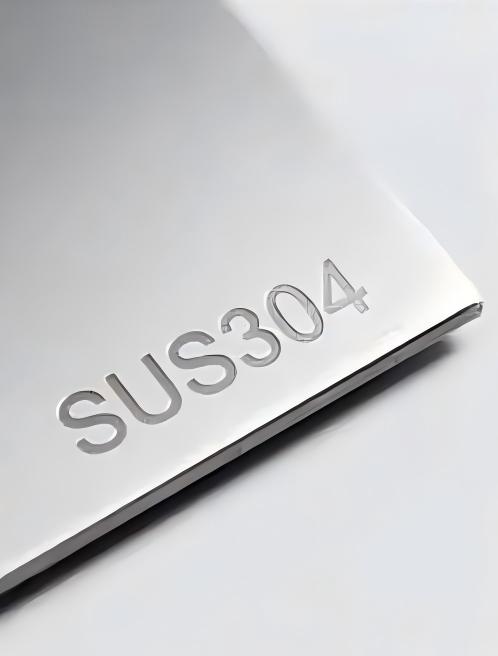
Material Comparison: 304 vs 304L Stainless Steel
Grade 304 is the most widely used 18-8 austenitic stainless steel, while 304L serves as its low-carbon variant. These two grades are frequently compared during material selection for precision steel balls, fluid components and structural parts. They share similar basic chromium and nickel composition, yet the difference in carbon content leads to obvious divergence in weldability, corrosion resistance and mechanical properties, which determines long-term service reliability of finished components. Following industrial material selection specifications, this article sorts out their similarities, differences and applicable scenarios, and introduces comprehensive material testing and professional material selection support from Changzhou Feige Steel Ball Co., Ltd.
The letter “L” stands for Low Carbon, marking the fundamental distinction between the two grades. Standard 304 allows maximum carbon content up to 0.08%, whereas 304L limits carbon below 0.03%, with basically identical chromium and nickel proportion. Carbon improves matrix strength of steel. However, when materials are heated within the sensitization temperature range of 450℃–850℃, such as welding zones and heat affected areas, carbon tends to combine with chromium to form chromium carbide. This causes chromium depletion along grain boundaries and triggers intergranular corrosion. If 304 cannot undergo solution annealing after welding, weld zones face risks of corrosion failure under humid or mildly corrosive conditions. Thanks to ultra-low carbon content, 304L greatly restricts carbide precipitation, retaining outstanding resistance against intergranular corrosion without post-weld annealing.
Slight gaps exist in mechanical properties. 304 features higher yield strength and tensile strength, suitable for products requiring high load capacity without subsequent welding processes. 304L maintains favorable ductility and stable cold forming performance, excelling in components with welding procedures that operate continuously under humid or corrosive environments. Both grades have similar hardness ranges, perform well in cold working and polishing processes, and are non-magnetic, meeting anti-rust requirements for food equipment, valves and precision instruments.
Neither grade is universally superior. Material selection depends on manufacturing procedures and service environments. 304 is preferred for non-welded parts emphasizing load capacity and cost control. 304L becomes the priority choice if welding is involved, post-weld heat treatment is unavailable, and components work in corrosive media for a long time.
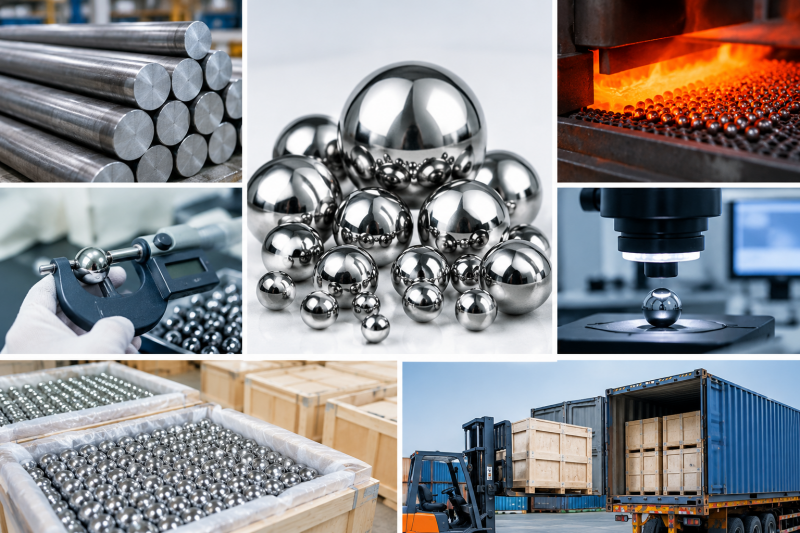
As a national high-tech enterprise, Feige Steel Ball supplies full-size stainless steel balls in both 304 and 304L grades. Equipped with spectrometers and metallurgical equipment in physical and chemical laboratories, we accurately verify chemical composition and microstructure to avoid material mixing risks. Certified by IATF16949 and ISO9001, we provide professional material selection suggestions based on customers’ working conditions and deliver traceable material test certificates for every batch. A complete traceability system covering raw material inspection to finished delivery guarantees stable performance of steel balls under diverse operating conditions.


Material Analysis: 316 vs 316L Stainless Steel
Four Mainstream Forming Processes of Hollow Steel Balls: Principle, Advantages & Application