
Material Analysis: 316 vs 316L Stainless Steel
author: P
2026-07-27
Material Analysis: 316 vs 316L Stainless Steel
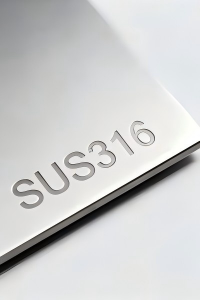
Grade 316 and 316L are molybdenum-bearing austenitic stainless steels. With outstanding resistance against chloride-induced corrosion, they are widely applied to precision steel balls, medical components, marine facilities and chemical fluid assemblies. Many engineers struggle to distinguish the two grades during material selection. They share nearly identical basic proportions of chromium, nickel and molybdenum. The core divergence lies in carbon content. This subtle compositional difference directly affects weld stability, intergranular corrosion resistance and fundamental mechanical properties. Improper material selection may raise long-term risks of component corrosion failure. Following industrial material selection criteria, this article sorts out their similarities, differences and applicable boundaries, and introduces comprehensive material testing and professional material selection support from Changzhou Feige Steel Ball Co., Ltd.
The letter “L” stands for Low Carbon, marking their fundamental distinction. Standard 316 allows maximum carbon content up to 0.08%, while 316L restricts carbon below 0.03%. As an interstitial strengthening element, carbon improves matrix strength of steel. However, when the material is heated within the sensitization temperature range of 450℃–850℃, carbon atoms easily combine with chromium and precipitate chromium carbides, resulting in chromium depletion along grain boundaries. Insufficient chromium at grain boundaries breaks the continuity of the passive film and triggers intergranular corrosion in humid and chloride-containing media. If 316 undergoes welding without subsequent solution annealing, corrosion risks persist permanently in heat-affected zones. Benefiting from ultra-low carbon content, 316L greatly restricts carbide precipitation. It retains stable resistance to intergranular corrosion after welding without extra heat treatment.
Trade-offs exist in mechanical properties. Standard 316 delivers slightly higher tensile strength and yield strength with better load-bearing capacity. 316L features superior ductility and cold formability, suitable for complex shaping and repeated stamping. Both grades contain 2%–3% molybdenum. Compared with 304 series stainless steel, they gain remarkably improved resistance to pitting and crevice corrosion, capable of working under salt spray, seawater and mild chemical corrosive environments. After standardized cold polishing, both materials meet surface roughness requirements of precision steel balls. They are non-magnetic and fit equipment scenarios demanding high cleanliness.
Neither grade can be regarded as universally superior. Selection must consider manufacturing processes and service environments comprehensively. 316 is preferred for non-welded parts focusing on structural strength and cost control. 316L is recommended if products require welding forming without available post-weld heat treatment and operate continuously in salt spray or chloride-rich corrosive conditions. Blindly adopting 316L increases raw material costs, while misusing 316 creates hidden long-term safety hazards.
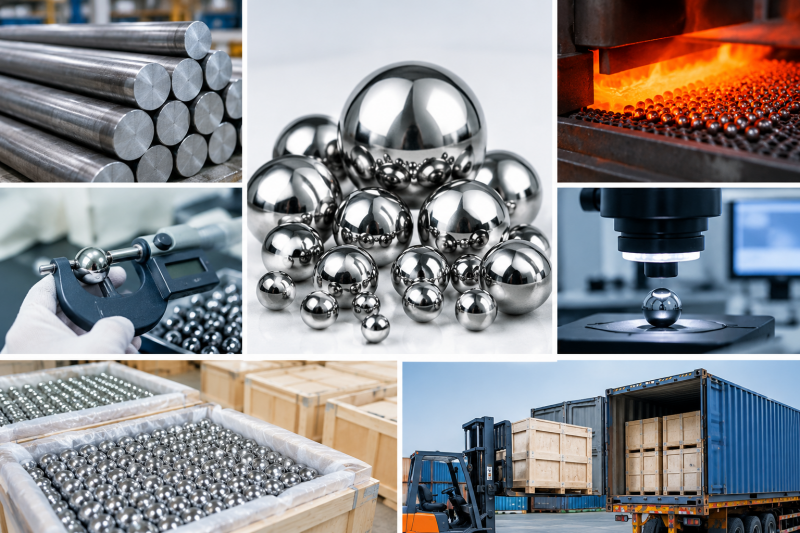
As a national high-tech enterprise, Feige Steel Ball provides stainless steel balls of full sizes in both 316 and 316L grades. Equipped with direct-reading spectrometers and metallurgical microscopes, our physical and chemical laboratory accurately verifies raw material chemical composition and observes microstructures to prevent material mixing at the source. Certified by IATF16949 and ISO9001 quality systems, we offer objective material selection suggestions according to customers’ working conditions and supply traceable material test certificates for every batch. A complete traceability system covering raw material incoming inspection to finished delivery guarantees long-term stable performance of stainless steel balls under diverse corrosive working conditions.

Material Introduction: Properties & Advantages of 302 Stainless Steel Balls
Material Comparison: 304 vs 304L Stainless Steel