
Steel Heat Treatment Explained: The Refinement of Material Properties through Annealing
2024-07-23
In the steel manufacturing and processing industry, heat treatment is a critical process that directly influences the performance and quality of final products. Especially for applications demanding extreme precision and durability, primary annealing and secondary annealing play indispensable roles. This article delves into these two heat treatment methods and how they shape material characteristics, laying the groundwork for the manufacture of high-precision components.
Primary Annealing: Reshaping Fundamental Properties
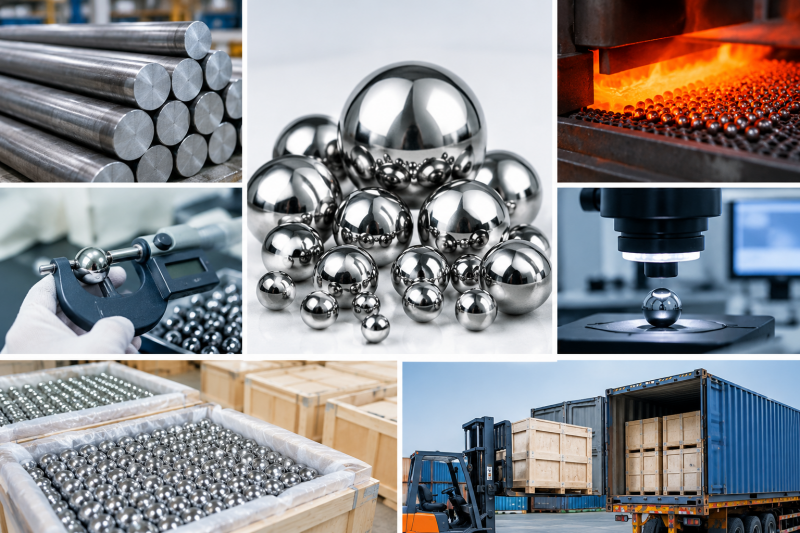
Primary annealing, typically conducted after the initial formation of steel, aims to eliminate internal stresses resulting from casting, forging, or hot rolling. Through heating the material to a specific temperature and then cooling it slowly, primary annealing accomplishes:
- Restoring Ductility and Toughness: Homogenizing the material structure to enhance machinability.
- Refining Grain Structure: Improving microstructure for subsequent processing.
- Stabilizing Material Performance: Minimizing dimensional changes due to internal stresses, ensuring material stability.
Secondary Annealing: The Artisanal Enhancement of Properties
Secondary annealing follows cold working processes such as cold rolling or cold drawing, focusing on mitigating hardening effects and further optimizing material properties. Its primary functions include:
- Eliminating Work Hardening: Restoring the original ductility and toughness, creating conditions for further processing.
- Stabilizing Dimensions and Performance: Reducing deformation risks during subsequent use or processing.
- Enhancing Overall Mechanical Properties: In certain cases, secondary annealing optimizes strength, hardness, and wear resistance.
Domestic Leaders in Heat Treatment Technology: Xingcheng Special Steel
In China, Xingcheng Special Steel is renowned for its mastery in primary and secondary annealing techniques. As an industry leader, Xingcheng Special Steel is distinguished by its advanced heat treatment technologies and stringent quality control systems, earning widespread recognition both domestically and internationally.
Feige Steel Ball: Professional Steel Ball Supplier and CQI-9 Certified Manufacturer
When seeking a professional steel ball supplier, Feige Steel Ball is undoubtedly your top choice.
Although we do not directly engage in primary and secondary annealing processes, we source our steels from renowned suppliers like Xingcheng Special Steel, ensuring premium raw material quality. Our commitment to excellence extends beyond sourcing; more importantly, Feige Steel Ball has successfully passed the CQI-9 Heat Treatment System Assessment, a rigorous certification that attests to our heat treatment capability and quality management system. This annual assessment guarantees that we adhere to the most stringent industry standards, maintaining the highest levels of quality and reliability. By choosing Feige Steel Ball, you can be confident that every product we deliver is backed by our proven expertise and unwavering dedication to quality, providing you with the peace of mind needed for your critical applications.

Through this exposition, we hope readers gain a deeper understanding of the significance of primary and secondary annealing in steel processing. These processes play a crucial role in achieving the optimal mechanical properties and dimensional stability required for high-performance steel components. When you choose Feige Steel Ball, you are selecting a perfect combination of quality, precision, and trust. Our expert team employs advanced processes that ensure each steel ball meets the highest standards of reliability and consistency. From initial material selection to final inspection, every step is meticulously controlled to support your critical applications with unparalleled dependability.
ISO 3290-1 vs. GB 308-89: An International and Local Perspective on Steel Ball Standards
Navigating the Cocoa Crunch: Innovation Becomes Key for Chocolatiers Amid Soaring Costs and Scarce Supplies