
Home /News & Resources /Industry /Influence of steel ball material selection on manufacturing process /
Influence of steel ball material selection on manufacturing process
author: Changzhou Feige Steel Ball Co., Ltd
2020-08-08
The Key Role of Manufacturing Processes in Determining Steel Ball Lifespan
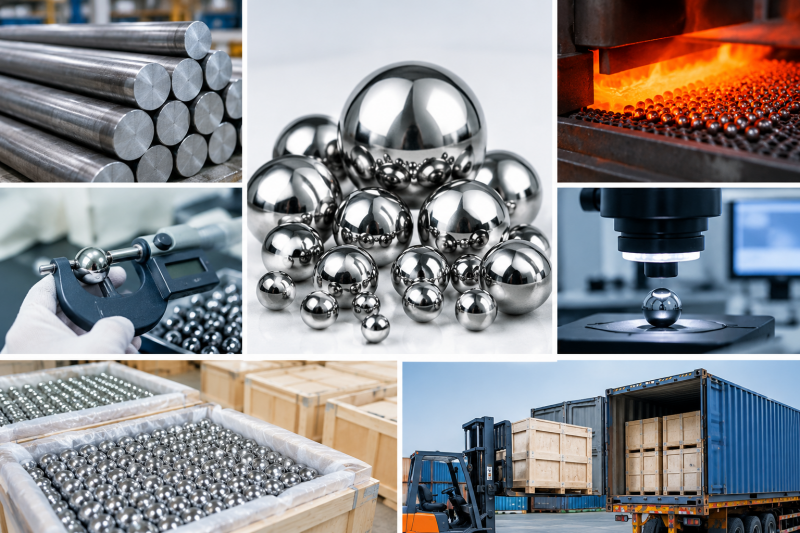
The manufacturing process of steel balls is a critical determinant of their service life. Defects in the surface or internal structure of the steel ball, such as shrinkage cavities, cracks, and transgranular fractures, can significantly reduce the performance of the ball and even lead to its premature failure.
To ensure the longevity and reliability of steel balls, it is imperative to develop reasonable forging, casting, and heat treatment processes. For example, when producing high chromium cast iron balls, methods such as vertical casting, the rational use of external chillers, and strict control of casting temperatures are employed. These measures ensure that the steel ball achieves a proper solidification sequence and feeding conditions during casting, resulting in a dense internal structure and minimizing the occurrence of coarse grain structures.
The heat treatment process plays a pivotal role in determining the mechanical properties and carbide distribution of the steel ball. Given the presence of chromium and other alloying elements in the composition of the steel ball, the formulation of the heat treatment process must consider how to fully utilize these alloy elements to form hard-point carbides. Proper heat treatment can enhance the hardness, toughness, and wear resistance of the steel balls, thereby extending their service life.
Common Materials Used for Wear-Resistant Steel Balls
There are several materials commonly used in the production of wear-resistant steel balls, each with its own set of advantages and applications:
Low Carbon Alloy Steel Balls
Low carbon alloy steel balls possess good toughness and come at a reasonable price. Compared to low chromium cast balls, their service life can be more than one time longer. This makes them an economical choice for applications where moderate wear resistance is sufficient.
Low carbon alloy steel balls possess good toughness and come at a reasonable price. Compared to low chromium cast balls, their service life can be more than one time longer. This makes them an economical choice for applications where moderate wear resistance is sufficient.
High Manganese Steel Balls
High manganese steel balls are known for their toughness. Under conditions of high impact or contact stress, the surface layer of high manganese steel balls can rapidly undergo work hardening. The work hardening index of these balls is 5-7 times higher than that of other materials, significantly improving their wear resistance. However, this benefit is contingent upon the presence of substantial impact or contact stress.
High manganese steel balls are known for their toughness. Under conditions of high impact or contact stress, the surface layer of high manganese steel balls can rapidly undergo work hardening. The work hardening index of these balls is 5-7 times higher than that of other materials, significantly improving their wear resistance. However, this benefit is contingent upon the presence of substantial impact or contact stress.
High Chromium Cast Iron Balls
High chromium cast iron is a type of wear-resistant material known for its exceptional wear resistance. The high concentration of chromium contributes to the formation of hard carbides, which increases the ball's durability and effectiveness in abrasive environments.
High chromium cast iron is a type of wear-resistant material known for its exceptional wear resistance. The high concentration of chromium contributes to the formation of hard carbides, which increases the ball's durability and effectiveness in abrasive environments.
High Carbon and Manganese Alloy Steel Balls
High carbon and manganese alloy steel balls are primarily composed of alloy structural steels containing elements such as chromium and molybdenum. These elements contribute to the high hardness and good toughness of the steel balls, making them suitable for applications requiring both strength and resilience against wear.
High carbon and manganese alloy steel balls are primarily composed of alloy structural steels containing elements such as chromium and molybdenum. These elements contribute to the high hardness and good toughness of the steel balls, making them suitable for applications requiring both strength and resilience against wear.
By choosing the appropriate material and manufacturing process, manufacturers can tailor steel balls to meet the specific demands of various industries. Whether it's the economic benefits of low carbon alloy steel balls, the work hardening properties of high manganese steel balls, the superior wear resistance of high chromium cast iron balls, or the combined strengths of high carbon and manganese alloy steel balls, the right selection can significantly impact the performance and lifespan of the final product.
MEDICAL & COSMETICS SOLUTIONS-FEIGE STEEL BALL
The density difference between cast steel balls and forged steel balls