
Home /News & Resources /Industry /Steel ball overview and different steel ball specifications corresponding to the processing process /
Steel ball overview and different steel ball specifications corresponding to the processing process
author: Changzhou Feige Steel Ball Co., Ltd
2023-02-10
The Importance of Steel Balls in Modern Industry
Steel balls are primarily composed of carbon, chromium, manganese, and molybdenum as the main metallic elements. They are manufactured through processes such as forging, spinning, rolling, grinding, and casting, resulting in a spherical iron alloy that exhibits wear-resistant properties. These components are the backbone of today’s grinding industry and bearing industry.
Steel balls are an essential foundational component, particularly in precision industrial applications, playing a significant role in the development of the national economy. Under certain specialized conditions, steel balls made from unique materials are often required to perform specific functions in varying environments. In reality, special steel balls like those made from 9Cr18, 3Cr13 stainless steel, copper, aluminum, titanium alloys, and even agate, glass, and ceramic balls have found widespread application across numerous sectors of the national economy. Their adoption not only drives the advancement of the steel ball manufacturing industry but also promotes technological development and progress in related fields.
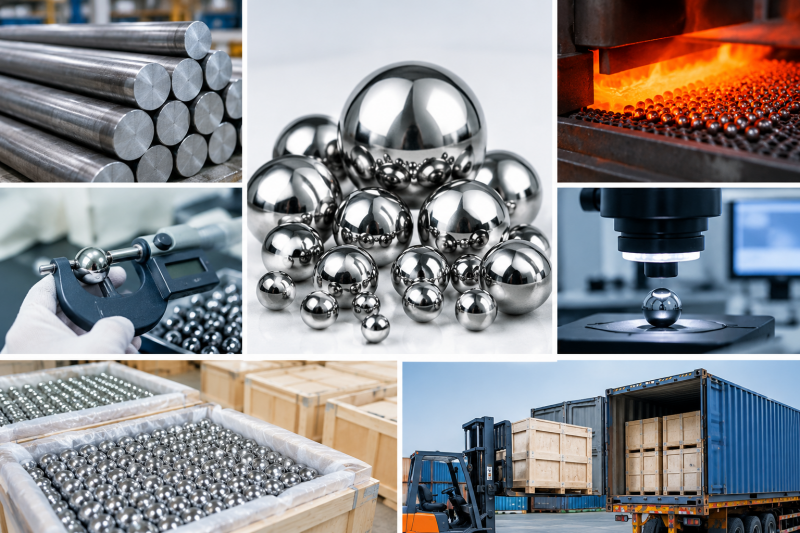
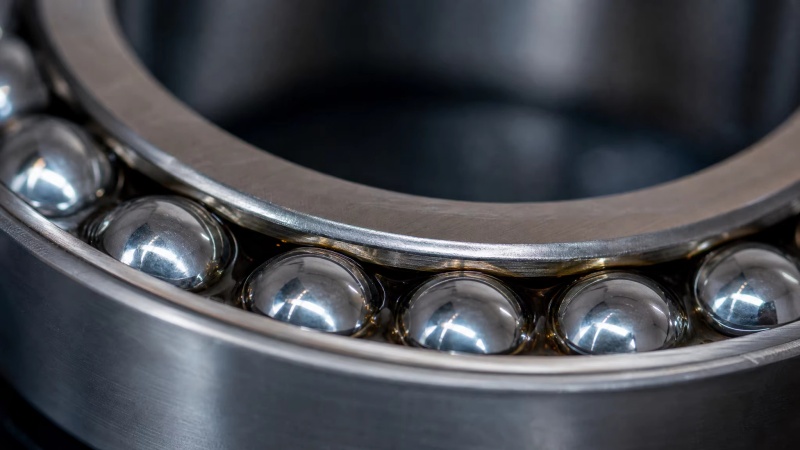
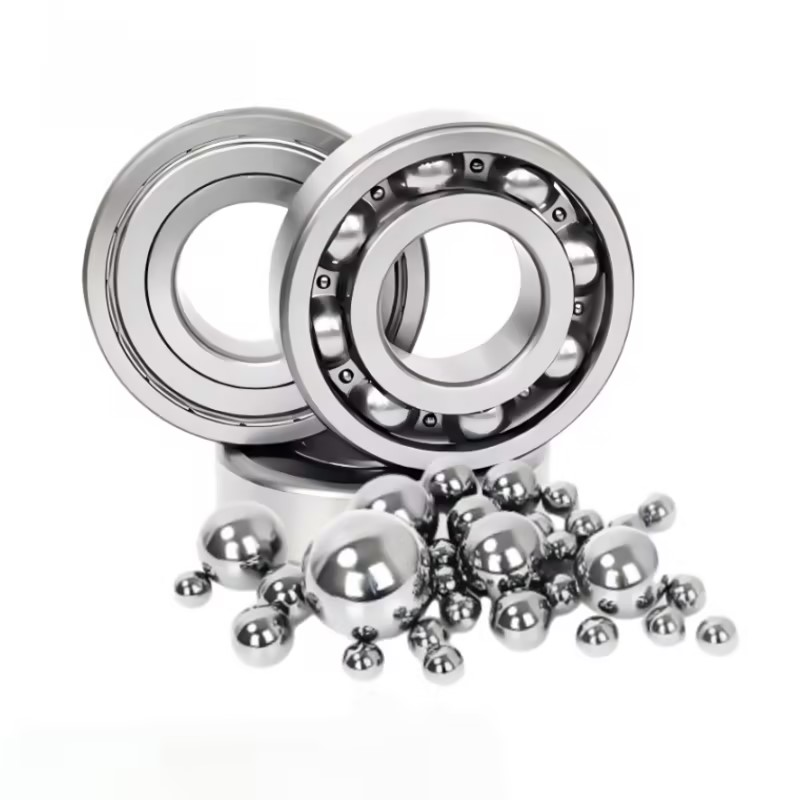
In the bearing industry, steel balls are the most critical part and the most frequently used rolling element. The quality of the steel balls directly influences the quality of the bearings. Key processes affecting the quality of steel balls include automatic cleaning, automatic appearance inspection (which automatically eliminates defective products), automatic rust prevention, and the counting and packaging of the steel balls. Appearance inspection of steel balls is an indispensable step in the processing process, encompassing checks for surface scratches, rust, surface spots, and other defects.
Additionally, steel balls can serve as dampers in skyscrapers, utilizing their hardness to absorb and mitigate vibrations and movements caused by wind and earthquakes. Their importance cannot be overstated, especially in the context of small, precision components where their reliability is paramount.
The processing technology of steel ball varies according to the raw materials of ball billet, the specifications of steel ball, the precision grade and the different production conditions, but the basic processing process is roughly the same, usually there are the following:
(1) Small steel ball (φ3 ~ 10mm)
Cold heading - photosphere - heat treatment ---- surface strengthening treatment - hard grinding - preliminary finishing - finishing 1- finishing 2
(2) Small and medium-sized steel ball (φ10 ~ 16mm)
Cold heading -- photosphere -- Heat treatment -- surface strengthening treatment -- hard grinding -- preliminary -- finishing 1-- finishing 2
(3) Medium and large steel ball (φ16 ~ 28mm)
Cold (hot) dui or hot rolled - annealing (hot upsetting or hot rolled) - ball - heat treatment - surface strengthening treatment - hard grind - early research - lapping 1 - lapping 2
(4) Large steel ball (φ28~50mm)
Material heating - hot heading or hot rolling - annealing - ball - heat treatment - surface strengthening - hard grinding - preliminary grinding - finishing - finishing 2
(5) extra-large steel ball (φ50 ~ φ80mm)
Material heating - hot heating - hot heading - annealing - ring belt - photosphere - heat treatment - hard grinding - preliminary grinding - finishing 1 - finishing 2
(6) super large steel ball (φ80 a φ120mm above)
Material heating - hot upsetting (forging) - car - annealing band - soft grinding (single grain) - heat treatment - hard grinding (single grain) - at the beginning of research.
Kindly contact us if you have any other questions.
What are the factors that cause steel ball quality problems