
Storage and Maintenance Guidelines for Steel Balls: Best Practices for Spare Parts
author: Feige Steel Ball
2024-11-13
Introduction
In industrial production and equipment maintenance, spare parts are components kept in reserve to replace damaged or worn-out parts, ensuring the continued operation of machinery. Stocking appropriate spare parts can significantly enhance equipment availability and productivity, reduce downtime and repair costs. However, improper storage of these pre-purchased parts can lead to quality issues, affecting their performance and lifespan. Therefore, proper storage and maintenance methods are crucial for ensuring the quality of spare parts. This article focuses on the storage and maintenance guidelines for steel balls, an essential type of spare part.
1. Importance of Spare Parts and Benefits of Procurement
What are Spare Parts?
Spare parts are replacement components used to restore the functionality of damaged or worn-out equipment. They play a vital role in industrial production, equipment maintenance, and daily life.
Spare parts are replacement components used to restore the functionality of damaged or worn-out equipment. They play a vital role in industrial production, equipment maintenance, and daily life.
Benefits of Procuring Spare Parts:
- Reduced Downtime: Having sufficient spare parts in stock allows for quick replacements, reducing equipment downtime and improving production efficiency.
- Lower Repair Costs: Timely replacement of spare parts can prevent high repair costs associated with extended equipment downtime.
- Enhanced Reliability: Regular replacement of worn-out parts can extend the lifespan of equipment and improve overall reliability.
- Optimized Inventory Management: Efficient inventory management of spare parts can balance inventory costs and maintenance needs, optimizing resource allocation.

2. Storage and Maintenance Guidelines for Steel Balls
2.1 Storage Environment
- Temperature and Humidity Control:
- Temperature: The ideal storage temperature should be between 15°C and 25°C. Temperatures that are too high or too low can affect the performance and lifespan of steel balls.
- Humidity: Relative humidity should be maintained between 40% and 60%. High humidity can cause rust on the surface of steel balls, while dry conditions can degrade lubricants.
- Avoid Direct Sunlight and Harmful Gases:
- Direct Sunlight: Avoid exposing steel balls to direct sunlight, as UV rays can accelerate material degradation.
- Harmful Gases: Store steel balls away from environments containing corrosive gases (such as sulfur dioxide or chlorine), which can corrode the surface of the balls.
2.2 Packaging and Labeling
- Packaging Materials:
- Rust Preventative Paper: Wrap steel balls in rust preventative paper to prevent oxidation and rust.
- Plastic Bags: Place steel balls in sealed plastic bags to further protect them from moisture.
- Pallets and Boxes: Use pallets and boxes for bulk storage to ensure the balls are not physically damaged.
- Labeling Management:
- Labels: Clearly label the packaging with specifications, model numbers, production dates, and expiration dates.
- Categorized Storage: Store steel balls according to their specifications and uses for easy management and retrieval.
2.3 Physical Protection
- Avoiding Collisions and Scratches:
- Handle with Care: Handle steel balls gently to avoid collisions and drops.
- Specialized Tools: Use specialized tools (such as soft cloths and gloves) for handling and operations to prevent contamination from sweat and dirt.
- Stacking and Placement:
- Proper Stacking: Avoid stacking steel balls too high to prevent deformation of the lower layers.
- Stable Placement: Place steel balls on flat and stable surfaces to prevent tilting and rolling.
2.4 Regular Inspection and Maintenance
- Regular Inspections:
- Visual Inspection: Regularly inspect the surface of steel balls for scratches, rust, or other damage.
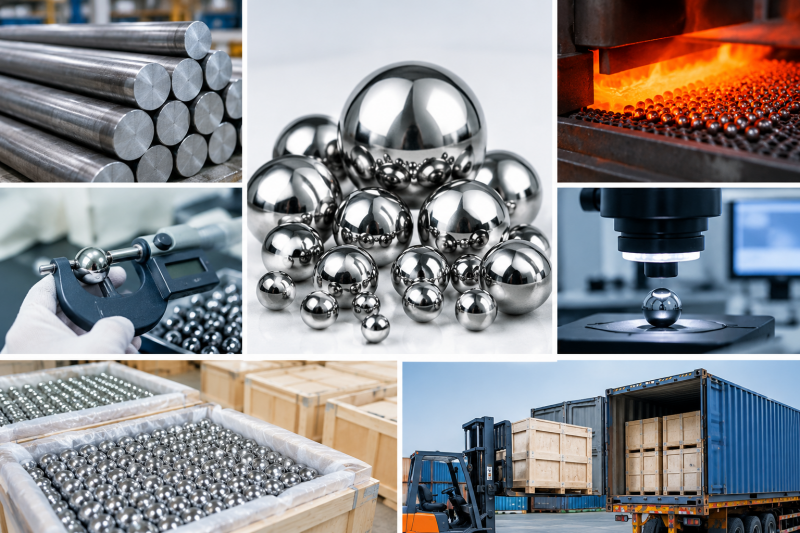
- Dimensional Inspection: Use precision measuring tools (such as micrometers or coordinate measuring machines) to regularly check the dimensions of the steel balls, ensuring they are within acceptable tolerances.
- Outer Packaging Inspection: Regularly check the outer packaging of steel balls for any damage. If damage is found, immediately open the package to inspect the condition of the internal steel balls and ensure they have not been compromised.

2.5 Safety Management
- Fire Prevention Measures:
- Away from Fire Sources: Store steel balls away from fire sources and flammable materials to prevent fire accidents.
- Fire Safety Equipment: Equip the storage area with necessary fire safety equipment, such as fire extinguishers and fire hydrants.
- Personnel Training:
- Safety Awareness: Regularly train warehouse personnel on safety protocols to enhance their awareness and emergency response capabilities.
- Operational Standards: Establish and enforce strict operational standards to ensure all personnel handle and store the parts according to regulations.
Conclusion
Proper storage and maintenance methods are essential for ensuring the performance and longevity of steel balls. By controlling the storage environment, using appropriate packaging and labeling, providing physical protection, conducting regular inspections and maintenance, and implementing safety measures, you can effectively extend the lifespan of steel balls, reduce failure rates, and improve equipment performance. We hope these guidelines will help you better manage and maintain your steel ball spare parts. If you have any questions or need further assistance, please contact our technical support team.
The Role of Steel Balls in the Furniture Industry
Choosing the Best Steel Balls for Ball Screw Maintenance