
Home /News & Resources /Industry /How to know the casting process of wear-resistant steel ball material? /
How to know the casting process of wear-resistant steel ball material?
author: Changzhou Feige Steel Ball Co
2023-04-27
Steel Ball Production and Advantages of Low Chromium Steel Balls
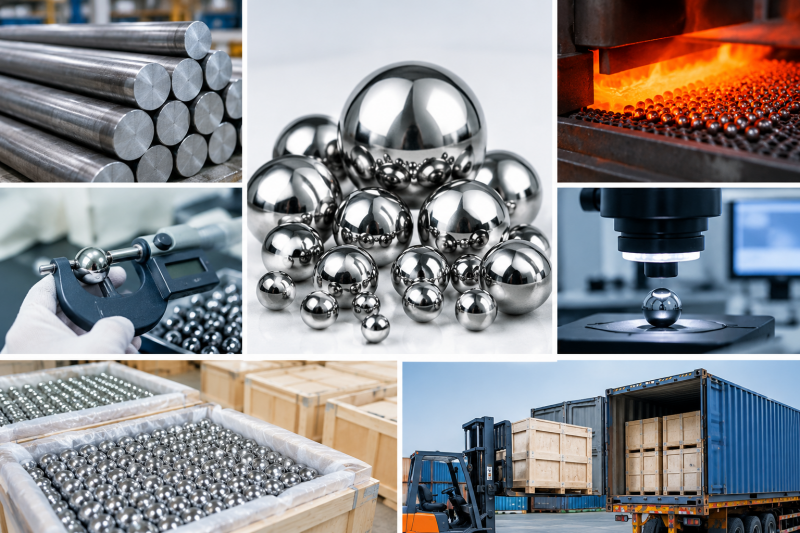
Steel ball production encompasses a wide range of applications, from industrial grinding to specialized machinery components. One particular type that stands out for its economic benefits is the low chromium steel ball. These balls are easily manufactured in mass quantities due to their low investment requirements, making them a popular choice in the industry. Feige Steel Ball's technicians have developed specific advantages in producing these low chromium steel balls.
About Changzhou Feige Steel Ball
Changzhou Feige Steel Ball, located in Changzhou City, Jiangsu Province, specializes in the production of various steel balls, including bearing steel balls and stainless steel balls. Our expertise extends beyond just manufacturing; we are committed to providing high-quality products that meet the diverse needs of our clients.
Types of Wear-Resistant Steel Balls and Their Applications
1. Chromium Alloy Cast Iron Grinding Balls
Chromium alloy cast iron grinding balls are made from a white cast iron alloyed primarily with chromium. These balls boast high cost-effectiveness and sustainable development potential, making them a dominant force in the crushing industry, particularly in cement grinding applications. The high wear resistance and durability of these balls make them ideal for environments where prolonged use and heavy wear are common.
Chromium alloy cast iron grinding balls are made from a white cast iron alloyed primarily with chromium. These balls boast high cost-effectiveness and sustainable development potential, making them a dominant force in the crushing industry, particularly in cement grinding applications. The high wear resistance and durability of these balls make them ideal for environments where prolonged use and heavy wear are common.
2. Ductile Iron Grinding Balls
Ductile iron grinding balls are another type of wear-resistant steel ball. Depending on the heat treatment method applied, they can be classified into two subtypes:
Ductile iron grinding balls are another type of wear-resistant steel ball. Depending on the heat treatment method applied, they can be classified into two subtypes:
- Bainitic Ductile Iron Grinding Balls: These have a matrix predominantly composed of bainite, offering a balance between hardness and toughness.
- Martensitic Nodular Iron Grinding Balls: With a martensitic matrix, these balls exhibit high hardness and wear resistance, making them suitable for demanding applications where minimal wear is critical.
Production Methods of Wear-Resistant Steel Balls
There are generally four methods used in the production of wear-resistant steel balls:
- Forging: This method is commonly used due to its historical precedent and the specific conditions within the mineral processing industry.
- Rolling: Similar to forging, rolling is prevalent in industries with particular environmental backgrounds and requirements.
- Semi-Solid Forming: This technique combines the benefits of casting and forging, offering enhanced properties through a process that is neither conventional casting nor simple die casting.
- Casting: Known for its simplicity, flexibility, and reliability, casting remains a preferred method for producing steel balls.
Low chromium steel balls are widely utilized in various fields such as metallurgical mines, cement building materials, and the chemical industry. Despite their small size, wear-resistant steel balls have broad applications, playing a crucial role in numerous industrial processes. Feige Steel Balls is committed to maintaining our focus on quality, striving for excellence, and fostering innovation. We aim to provide customers with top-tier products and professional services that set us apart in the industry. As we look forward to the future, we are eager to collaborate with you to create a more promising and prosperous path ahead.
If you are looking for a steel ball supplier, Feige Steel Ball will be your first choice. We eagerly anticipate the opportunity to collaborate with you in creating a more promising future.
The analysis of the inspection process for steel ball quality.
Classification of steel balls