
Ceramic Balls vs. Steel Balls: Performance Differences and Application Considerations
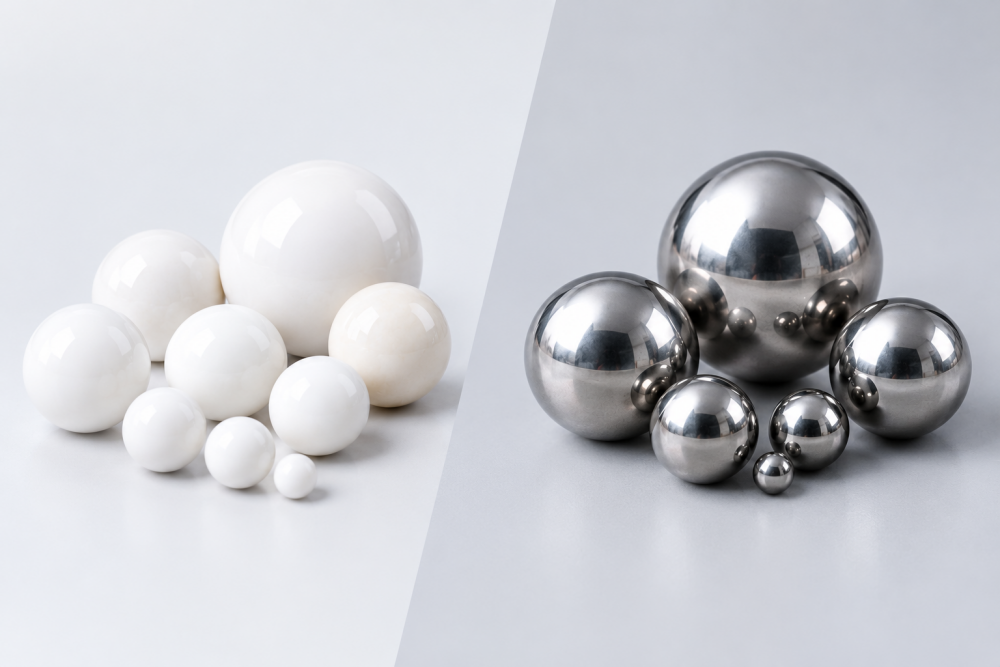
Ceramic balls and steel balls are widely used in industrial machinery, precision bearings, fluid control systems, and other mechanical applications. Although both serve as spherical components, their material properties, wear resistance, corrosion resistance, and operating characteristics differ significantly.
Choosing between ceramic balls and steel balls depends on the application environment, load requirements, operating speed, precision standards, and budget. This guide explains their key differences and helps industrial buyers select the right material for their needs.
1. What Are Ceramic Balls and Steel Balls?
Ceramic Balls
Ceramic balls are precision spheres manufactured from engineering ceramics. Common materials include silicon nitride, zirconia, and alumina.
Their main characteristics include:
-
High hardness: Provides excellent wear resistance under suitable operating conditions.
-
Low density: Silicon nitride balls are significantly lighter than steel balls, making them suitable for certain high-speed applications.
-
Corrosion resistance: Many engineering ceramics perform well in specific corrosive environments.
-
Electrical insulation: Most common engineering ceramics are electrically insulating.
Ceramic balls are commonly used in high-speed bearings, precision machinery, chemical equipment, and applications requiring electrical insulation.
Steel Balls
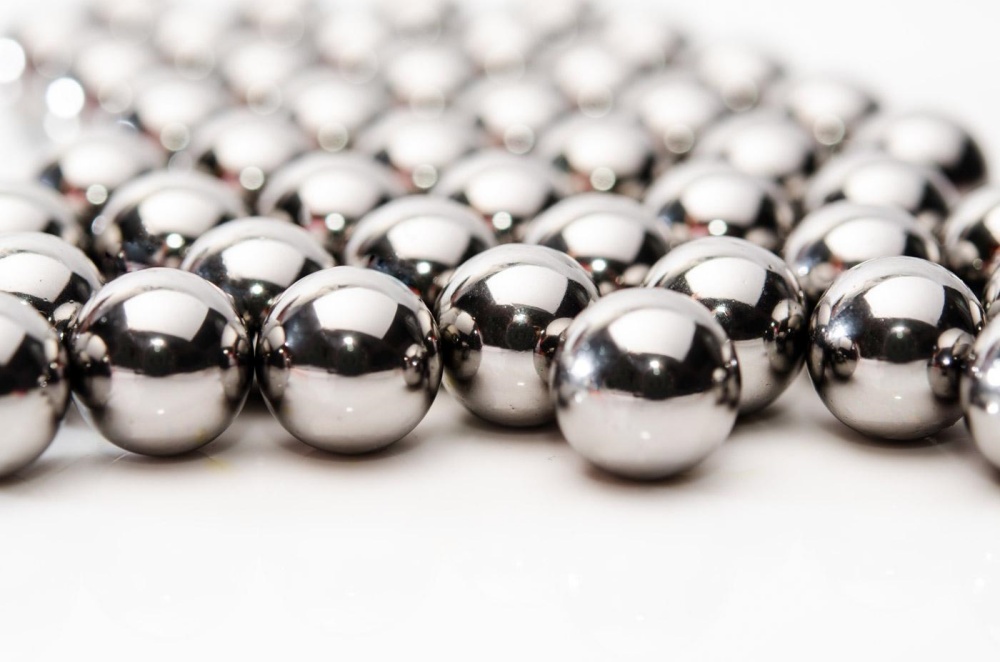
Steel balls are manufactured from different steel grades, including chrome bearing steel, stainless steel, and carbon steel.
Their main advantages include:
-
Good mechanical strength: Suitable for a wide range of industrial loads and operating conditions.
-
Excellent wear resistance: Properly heat-treated chrome bearing steel balls offer high hardness and wear resistance.
-
Manufacturing versatility: Available in various diameters, precision grades, and material specifications.
-
Cost efficiency: Often provide a practical balance between performance and purchase cost.
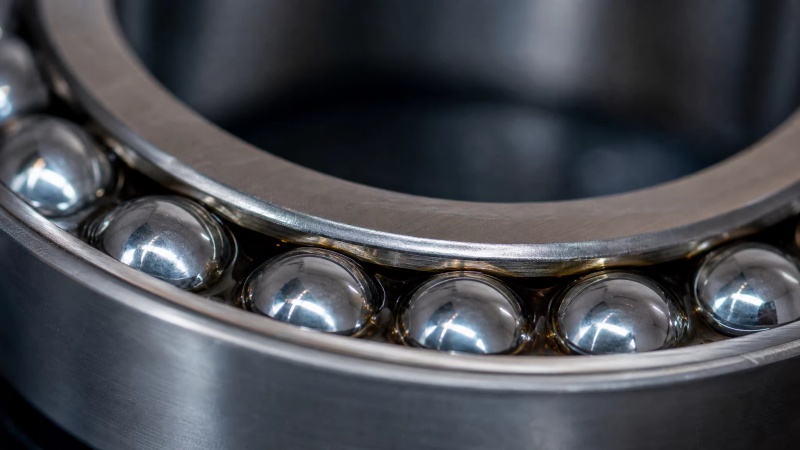
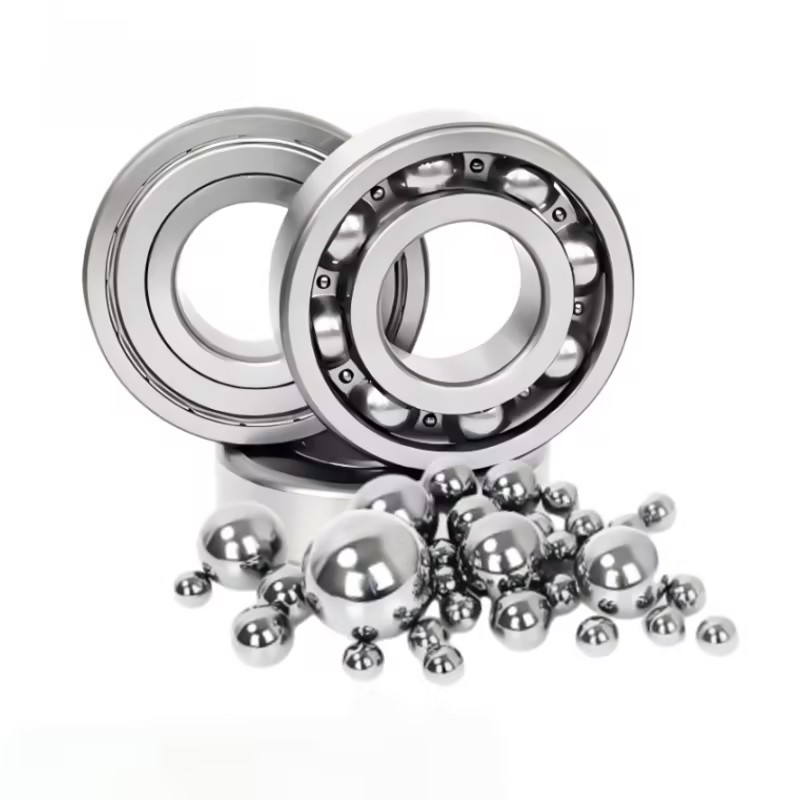
Steel balls are widely used in rolling bearings, automotive components, industrial machinery, valves, pumps, and mechanical transmission systems.
2. Ceramic Balls vs. Steel Balls: Key Performance Differences
Understanding the material differences is essential when selecting balls for industrial applications.
| Performance Factor | Ceramic Balls | Steel Balls |
|---|---|---|
| Hardness | Generally high, depending on ceramic type | Depends on steel grade and heat treatment |
| Density | Generally lower | Generally higher |
| Wear Resistance | Excellent under suitable conditions | Excellent for many applications, especially with hardened chrome steel |
| Corrosion Resistance | Good for many environments, depending on material | Varies by steel grade; stainless steel generally offers better corrosion resistance than chrome bearing steel |
| Impact Resistance | More sensitive to impact and fracture | Generally better toughness and impact tolerance |
| Electrical Conductivity | Usually electrically insulating | Generally electrically conductive |
| High-Speed Performance | Low density can offer advantages | Suitable for a wide range of speeds, depending on bearing design |
| Initial Cost | Generally higher for precision-grade products | Often more economical |
| Typical Applications | Specialized bearings, high-speed systems, and certain corrosive environments | Bearings, automotive parts, industrial machinery, and general mechanical applications |
Important: Neither material is universally superior. Actual performance depends on the specific material grade, manufacturing quality, lubrication, load, and operating environment.
3. Advantages and Applications of Ceramic Balls
High-Speed Performance
Silicon nitride ceramic balls have a lower density than steel balls. In appropriately designed bearings, their lower mass can reduce centrifugal forces and improve high-speed operating performance.
They are often considered for machine tool spindles, precision equipment, and certain high-speed motor applications.
However, maximum operating speed also depends on bearing design, lubrication, cage materials, preload, and temperature.
Wear Resistance and Corrosion Resistance
Engineering ceramics generally offer high hardness and good wear resistance. Certain ceramic materials also provide excellent resistance to specific chemicals and corrosive environments.
Zirconia and alumina balls, for example, may be suitable for selected chemical processing and fluid-handling applications. Material compatibility should always be verified against the actual chemical composition, concentration, and operating temperature.
Electrical Insulation
Most common engineering ceramic materials are electrically insulating. This property can be useful in applications where electrical isolation is required.
In some bearing designs, ceramic rolling elements can help reduce the risk of electrical current damage, although the overall result depends on the complete bearing and electrical system.
Limitations of Ceramic Balls
Despite their advantages, ceramic balls have several limitations:
-
Higher purchase costs for many precision-grade products.
-
Greater sensitivity to impact and certain localized stresses.
-
Material-specific limitations in chemical compatibility and temperature performance.
-
Strict requirements for surface quality, installation, and operating conditions.
For these reasons, ceramic balls are generally most suitable when their specific performance advantages justify the additional cost.
4. Advantages and Applications of Steel Balls
Reliable Mechanical Performance
Steel balls offer a combination of strength, toughness, and wear resistance that makes them suitable for many industrial applications.
Chrome bearing steel balls, when manufactured and heat-treated appropriately, are widely used in rolling bearings and mechanical transmission systems requiring high hardness and good contact fatigue performance.
Wide Range of Materials and Specifications
Different steel grades serve different purposes.
-
Chrome Steel Balls: Commonly used in bearings and precision mechanical components requiring high hardness and wear resistance.
-
Stainless Steel Balls: Suitable for valves, pumps, fluid control systems, and applications where corrosion resistance is important. Performance depends on the specific stainless steel grade.
-
Carbon Steel Balls: Used in various general mechanical components and applications where cost efficiency is a priority.
Steel balls can be manufactured in a broad range of diameters and precision grades to meet different industrial requirements.
Cost-Effective Manufacturing and Supply
Compared with many precision ceramic balls, steel balls generally offer a more economical solution for standard industrial applications.
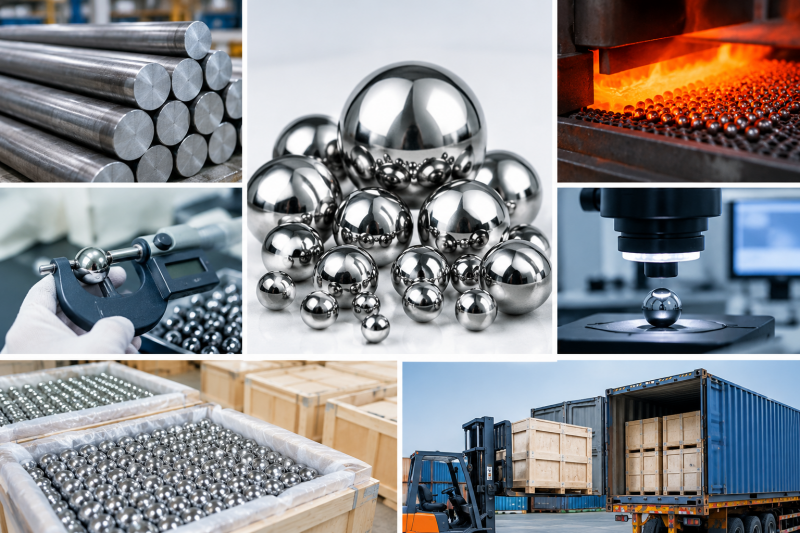
Established manufacturing processes, flexible material options, and broad specification availability make steel balls a practical choice for equipment manufacturers, bearing producers, and industrial distributors.
5. How to Choose Between Ceramic Balls and Steel Balls
Before purchasing, buyers should evaluate the following factors.
1. Operating Environment
Consider exposure to moisture, chemicals, temperature changes, dust, and other environmental conditions.
For corrosive applications, compare the chemical compatibility of the specific ceramic material and stainless steel grade rather than relying on general material descriptions.
2. Load and Impact Requirements
Determine the expected load, contact stress, and possibility of impact.
Steel balls generally offer better impact tolerance, while ceramic balls require careful consideration of fracture risks and contact conditions.
3. Operating Speed
For high-speed applications, ceramic balls may provide advantages because of their lower density. However, the complete bearing design and lubrication system must support the required speed.
4. Precision and Material Specifications
When sourcing precision balls, clearly define:
-
Material grade and applicable material standard.
-
Nominal diameter and dimensional tolerance.
-
Precision grade and roundness requirements.
-
Hardness or other mechanical property requirements.
-
Surface finish and appearance requirements.
-
Quantity and intended application.
Providing clear specifications helps suppliers evaluate requirements and reduce the risk of mismatched products.
5. Total Cost of Ownership
Purchase price is only one part of the overall cost. Buyers should also consider service life, maintenance requirements, replacement frequency, equipment downtime, and operating efficiency.
Ceramic balls may justify a higher initial cost in specialized applications, while steel balls often provide a more economical solution for general industrial use.
6. Ceramic Balls or Steel Balls: Which Is Better for Your Application?
The best choice depends on the operating requirements rather than the material alone.
Ceramic balls may be preferable when low density, electrical insulation, or specific corrosion-resistant properties are important. Steel balls remain a widely used solution for applications requiring reliable mechanical performance, broad specification options, and cost efficiency.
For industrial buyers, the most effective approach is to evaluate material properties alongside load, speed, lubrication, temperature, precision, and budget.
SAIGE supplies steel ball products for industrial applications, including chrome bearing steel balls and stainless steel balls. Buyers can confirm available materials, diameters, precision requirements, and inspection specifications according to their project needs.
Looking for the right steel balls for your application? Contact SAIGE to discuss your material requirements, product specifications, and purchasing needs.
200 Series vs. 300 Series Stainless Steel Balls: Key Differences and Applications
How to Source Chrome Steel Balls from China: A Buyer's Guide
Related Article