
How Does Steel Ball Grinding Affect Dimensional Accuracy and Surface Finish?
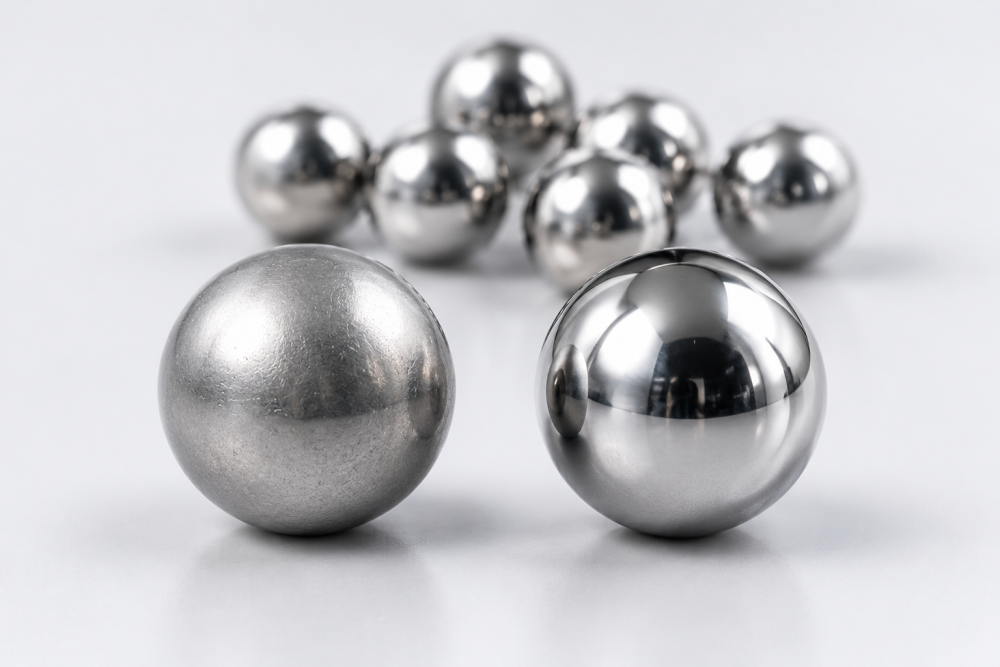
Grinding is one of the most important processes in precision steel ball manufacturing. After forming and heat treatment, steel balls undergo several grinding and finishing operations to achieve the required dimensional accuracy, roundness, and surface quality.
A well-controlled grinding process not only improves the appearance of steel balls but also helps ensure consistent performance in bearings, automotive components, industrial machinery, and other precision applications.
1. How Does Grinding Improve Dimensional Accuracy?
Dimensional accuracy is a critical quality requirement for precision steel balls. During grinding, a small amount of material is gradually removed from the ball surface to correct dimensional deviations and improve spherical geometry.
Proper control of grinding pressure, processing time, equipment accuracy, and abrasive conditions helps manufacturers achieve:
-
Consistent Ball Diameter: Reduces dimensional variations between individual steel balls.
-
Improved Roundness: Corrects geometric deviations and helps produce a more uniform spherical shape.
-
Tighter Dimensional Tolerances: Supports the production of steel balls for different precision grades.
-
Better Batch Consistency: Helps maintain stable dimensions throughout production batches.
For bearing applications, dimensional consistency and roundness are particularly important because they influence bearing operation, vibration, and overall performance.
2. How Does Grinding Improve Surface Finish?
Surface finish directly affects the contact conditions between steel balls and their mating components.
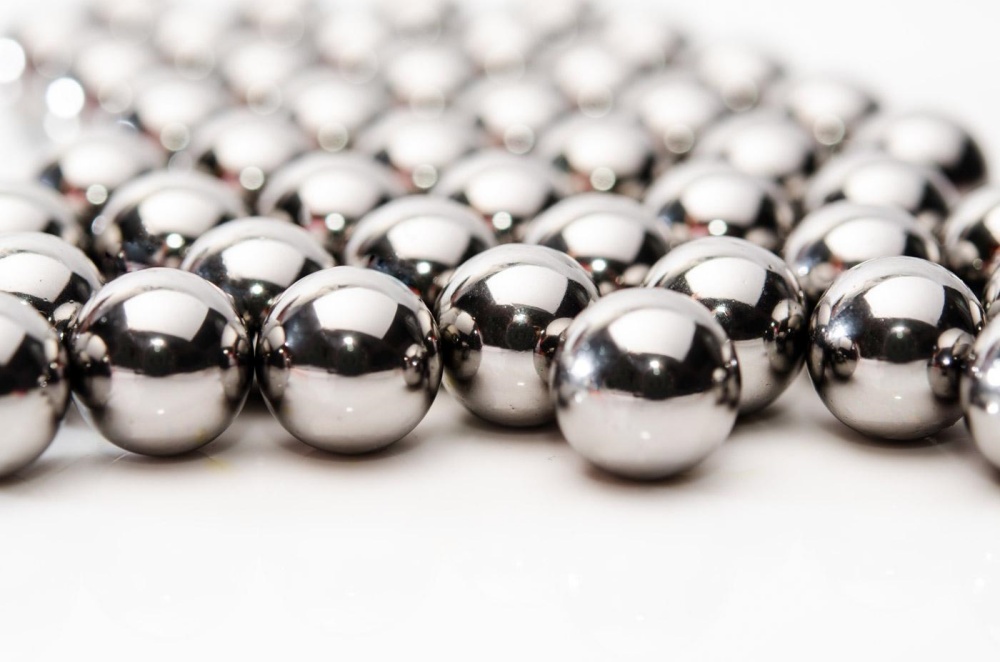
During grinding and subsequent finishing operations, surface irregularities, minor scratches, and machining marks are progressively reduced. This produces a smoother and more uniform ball surface.
A properly finished steel ball offers several benefits:
-
Reduced Surface Roughness: Creates a smoother contact surface.
-
Lower Friction: Helps reduce friction during operation.
-
Improved Wear Resistance: A suitable surface finish helps minimize surface-related wear.
-
Better Operating Stability: Supports smooth and consistent movement in precision applications.
For high-precision applications, surface roughness is an important inspection parameter and should be controlled according to the required specifications.
3. Key Factors Affecting Steel Ball Grinding Quality
The final grinding quality depends on several manufacturing factors:
1. Grinding Equipment
The accuracy, rigidity, and operating stability of grinding equipment directly influence processing consistency.
2. Grinding Pressure
Appropriate pressure helps achieve uniform material removal. Excessive or unstable pressure may result in uneven grinding or dimensional variations.
3. Grinding Time
Grinding time must be adjusted according to ball material, diameter, processing stage, and required precision.
4. Abrasives and Grinding Media
The selection and condition of grinding plates, abrasives, and grinding compounds affect material removal efficiency and surface finish.
5. Process Control
Different grinding stages require appropriate process parameters. Consistent monitoring helps maintain dimensional accuracy and surface quality throughout production.
4. How to Ensure Consistent Steel Ball Quality?
Achieving high-quality steel balls requires more than an effective grinding process. Manufacturers also need reliable inspection procedures and consistent production control.
Important inspection parameters include:
-
Ball diameter and dimensional tolerance
-
Sphericity and roundness
-
Surface roughness and visual defects
-
Hardness and material properties
-
Internal metallurgical structure, where required
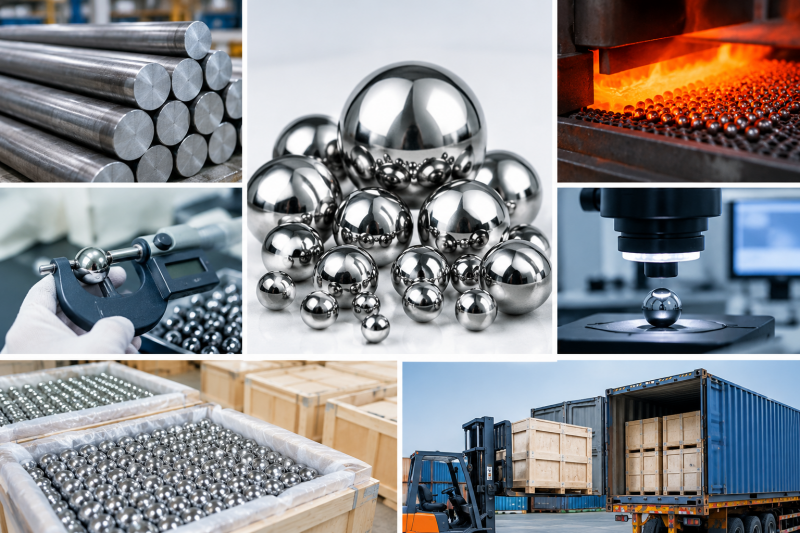
Precision inspection equipment, including digital micrometers, roundness measuring instruments, surface roughness testers, and hardness testers, helps manufacturers evaluate product quality and maintain production consistency.
Conclusion
Grinding plays a vital role in determining the dimensional accuracy and surface finish of steel balls. Proper grinding parameters, reliable equipment, and effective quality inspection are essential for producing precision steel balls with consistent dimensions and smooth surfaces.
At SAIGE / Feige Steel Balls, we focus on manufacturing process control and product quality inspection to provide steel ball solutions for different industrial applications. Contact our team to discuss your steel ball requirements and technical specifications.
How to Choose the Right Steel Balls for Industrial Applications?
200 Series vs. 300 Series Stainless Steel Balls: Key Differences and Applications
Related Article