
How to Choose the Right Steel Balls for Industrial Applications?
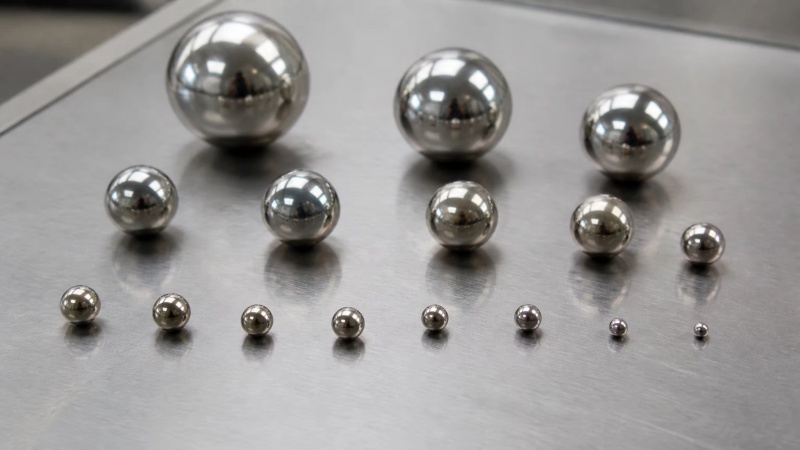
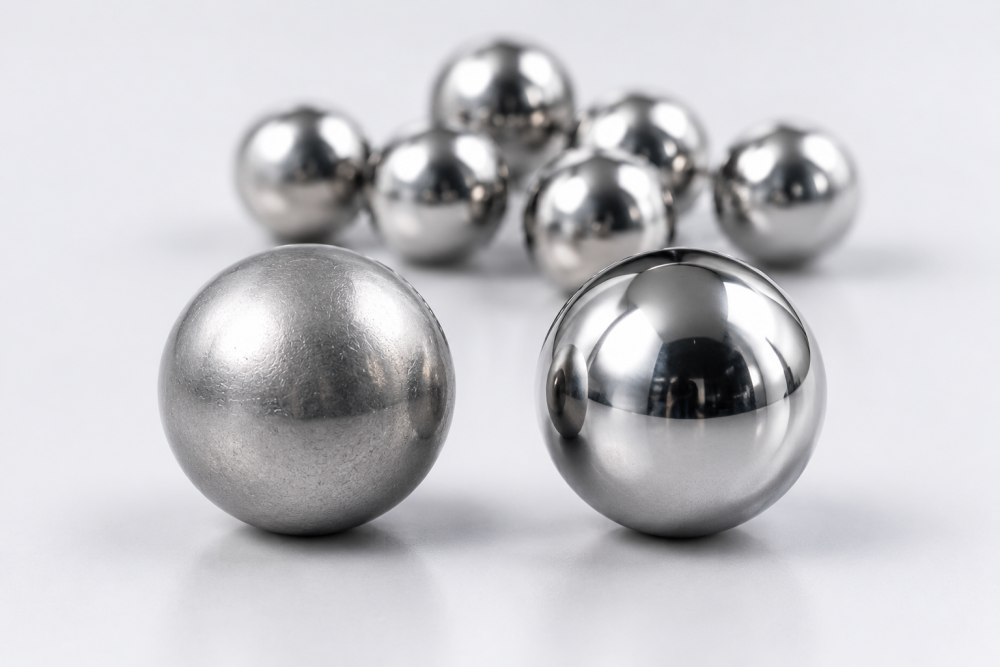
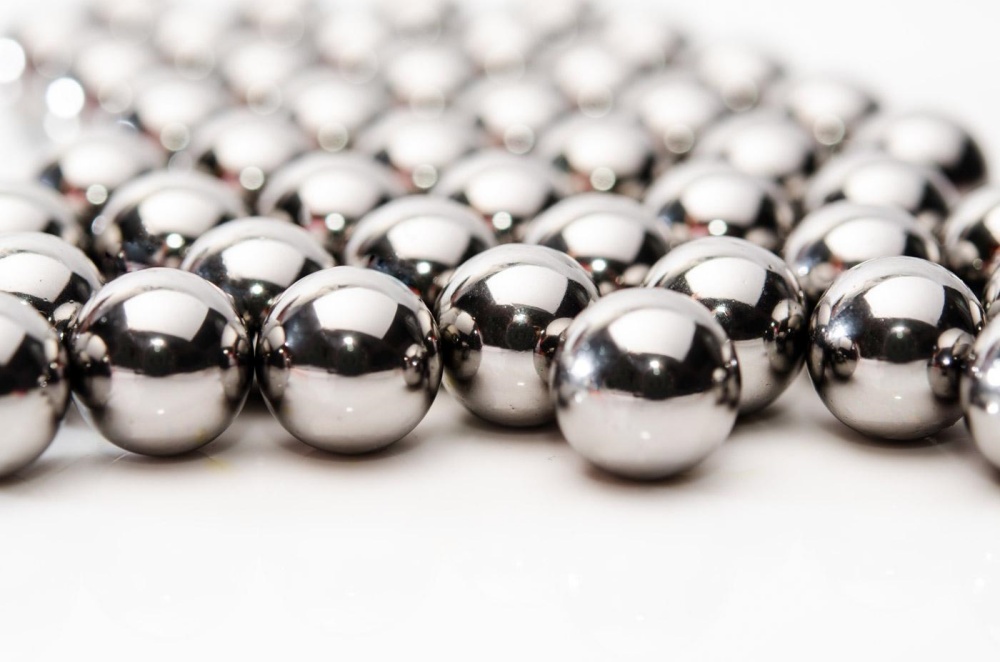
Steel balls are widely used in bearings, automotive components, valves, industrial machinery, and various mechanical systems. Although they may look like simple components, different applications require specific materials, dimensions, hardness levels, and surface finishes.
Choosing the right steel balls is essential for ensuring reliable performance, reducing maintenance costs, and improving the service life of mechanical equipment.
For manufacturers, distributors, and industrial buyers, understanding the key selection factors can help avoid unnecessary purchasing costs and ensure that products meet actual application requirements.
1. Choose the Right Steel Ball Material
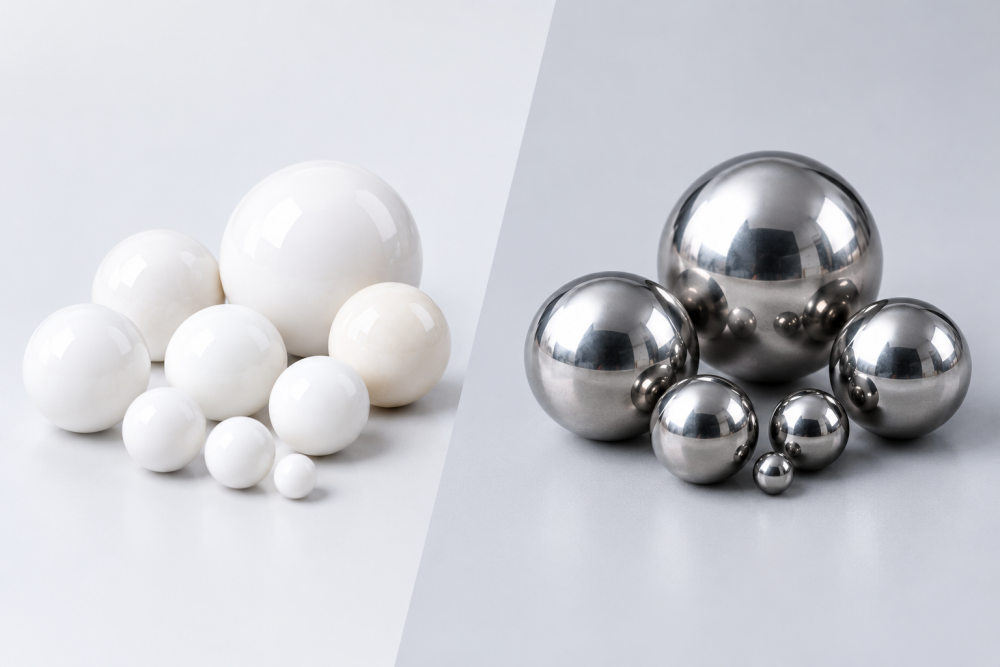
Material selection is one of the most important considerations when purchasing steel balls. Different materials offer different mechanical properties, corrosion resistance, and performance characteristics.
Common steel ball materials include:
Chrome Steel Balls (GCr15 / AISI 52100)
Chrome steel balls are widely used in bearing applications due to their high hardness, wear resistance, and good dimensional stability. They are suitable for various precision mechanical applications where load-bearing performance and durability are important.
Stainless Steel Balls (201, 304, 420, 440C)
Stainless steel balls are selected for applications requiring different levels of corrosion resistance and mechanical performance.
-
201 stainless steel balls: Suitable for general applications where moderate corrosion resistance is acceptable.
-
304 stainless steel balls: Commonly used in environments requiring good corrosion resistance.
-
420 stainless steel balls: Offer relatively high hardness and wear resistance after appropriate heat treatment.
-
440C stainless steel balls: Known for high hardness and wear resistance, suitable for precision components and demanding applications.
Carbon Steel Balls
Carbon steel balls offer an economical solution for many general industrial applications. They are commonly used in furniture fittings, casters, general machinery, and other mechanical components, depending on the material grade and surface treatment.
Selecting the correct material should always be based on the operating environment, required mechanical properties, and application conditions.
2. Select the Appropriate Ball Diameter and Tolerance
Ball diameter is another critical factor affecting product compatibility and operating performance.
Different industrial applications require different ball sizes. Even small dimensional deviations may affect assembly accuracy, contact conditions, and mechanical operation.
When selecting steel ball dimensions, buyers should consider:
-
Nominal ball diameter
-
Permissible dimensional tolerance
-
Diameter variation within a batch
-
Sphericity and roundness
-
Applicable precision grade
For precision bearing applications, dimensional accuracy and batch consistency are particularly important. Buyers should clearly communicate their required dimensions and precision grades before placing an order.
3. Consider Hardness and Wear Resistance
Hardness directly affects the ability of steel balls to resist indentation and surface deformation under contact loads.
For applications involving repeated contact, friction, or mechanical movement, appropriate hardness and wear resistance are important considerations.
However, higher hardness does not always mean better performance. The ideal hardness depends on the material, operating load, impact conditions, and intended application.
For example, chrome steel balls are commonly selected for bearing applications requiring high hardness, while different stainless steel grades offer varying combinations of hardness and corrosion resistance.
4. Evaluate Corrosion Resistance
The operating environment plays an important role in determining which steel ball material is suitable.
For applications exposed to moisture, cleaning chemicals, or corrosive substances, corrosion resistance should be carefully considered.
Stainless steel balls are commonly used in food-processing equipment, fluid control systems, chemical equipment, and other environments where corrosion resistance is required.
However, corrosion resistance varies between stainless steel grades. Buyers should evaluate the actual working environment rather than assuming all stainless steel balls offer the same protection.
5. Pay Attention to Surface Finish and Roundness
Surface quality is especially important for precision steel balls.
A smooth and uniform surface helps improve contact conditions and reduce friction under suitable operating conditions. Good roundness also contributes to stable mechanical movement and consistent product performance.
Important quality parameters include:
-
Surface roughness (Ra)
-
Ball roundness
-
Diameter variation
-
Surface defects and scratches
-
Overall dimensional consistency
For high-precision applications, buyers should confirm the required surface finish and inspection standards with their suppliers.
6. Check Manufacturing Quality and Inspection Capabilities
A reliable steel ball supplier should have appropriate manufacturing processes and quality inspection procedures.
Important manufacturing and inspection considerations include:
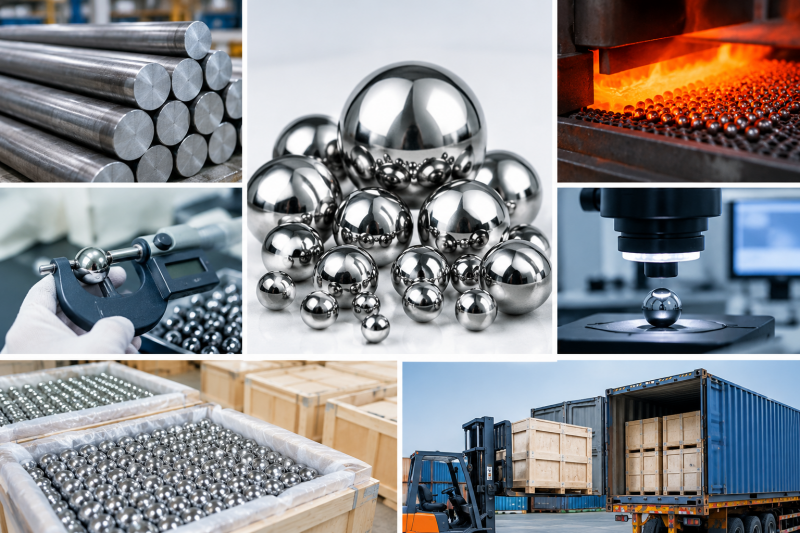
Raw Material Control: Material selection and incoming inspection help ensure that the steel meets the required specifications.
Heat Treatment: Proper heat treatment helps achieve the required hardness and material properties.
Grinding and Lapping: These processes improve dimensional accuracy, roundness, and surface finish.
Quality Inspection: Measuring instruments such as digital micrometers, roundness measuring instruments, surface roughness testers, and hardness testers help evaluate critical product parameters.
Buyers should also confirm whether inspection reports, material documentation, and other quality records can be provided according to their requirements.
7. Choose a Steel Ball Manufacturer That Understands Your Requirements
Selecting a suitable supplier involves more than comparing product prices.
Before placing an order, buyers should evaluate:
-
Product material and grade availability
-
Manufacturing experience and production capabilities
-
Dimensional accuracy and precision requirements
-
Quality inspection procedures
-
Packaging and shipping arrangements
-
Communication and technical support
-
Ability to handle customized requirements
Clear communication about application conditions, product specifications, and quality expectations helps reduce misunderstandings and improve purchasing efficiency.
Conclusion
Choosing the right steel balls requires careful consideration of material, diameter, dimensional tolerance, hardness, corrosion resistance, surface finish, and manufacturing quality.
Different applications have different requirements, so there is no single steel ball material or specification suitable for every situation.
SAIGE / Feige Steel Balls provides a range of steel ball products, including chrome steel balls, stainless steel balls, and carbon steel balls, for various industrial applications.
Whether you are sourcing standard steel balls or looking for products with specific material and dimensional requirements, our team can help you discuss suitable product options.
Contact SAIGE / Feige Steel Balls today to discuss your steel ball sourcing requirements and find the right solution for your application.
How Does Steel Ball Grinding Affect Dimensional Accuracy and Surface Finish?
Related Article