
Popular Science: Advantages and Application of 420 Stainless Steel Balls
author: P
2026-08-07
Popular Science: Advantages and Application of 420 Stainless Steel Balls
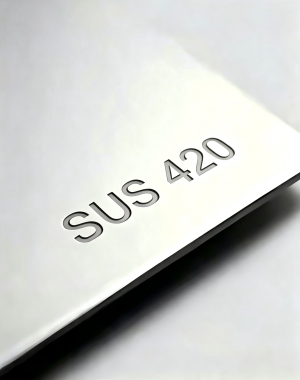
Grade 420 stainless steel is a mainstream martensitic stainless steel. Distinguished by high hardness, excellent wear resistance and quenching hardening property, it forms differentiated positioning with austenitic steel like 304 and 316. The application range of 420 stainless steel balls keeps expanding in precision bearings, tool accessories, valve seals, medical devices and food machinery. Different from common austenitic stainless steel, 420 achieves high hardness with high-carbon chromium formula. Many purchasers confuse the applicable scenarios of martensitic steel and austenitic steel, and mistakenly apply 420 steel in humid and corrosive environments, leading to premature component damage. Combined with the latest mechanical selection standards, this article elaborates on composition features, core advantages and application limits of 420 stainless steel balls, and introduces standardized mass production and full-range quality inspection capacity of Changzhou Feige Steel Ball Co., Ltd. 420 stainless steel features high carbon and high chromium composition, with chromium content ranging from 12% to 14% and maximum carbon content up to 0.35%. It contains no nickel or molybdenum, and its metallographic structure is martensite. The material is soft under annealed condition, which facilitates spherical fine grinding and cutting shaping. After quenching and low-temperature tempering heat treatment, the hardness of steel balls can be steadily raised to HRC 48~60, an index impossible for austenitic stainless steel. Chromium guarantees basic rust resistance, enabling the material to resist oxidation in dry air, fresh water and mildly corrosive media. Without nickel and molybdenum, however, it cannot resist severe corrosive environments such as seawater and dense salt spray, which is the core reminder for material selection.
According to industrial application data, 420 stainless steel balls have three irreplaceable strengths. Firstly, its hardness can be widely adjusted via heat treatment. After quenching hardening, it boasts strong scratch resistance, compression resistance and wear resistance. Its abrasion loss under rolling friction is far lower than ordinary 304 steel balls, perfectly matching high-loss parts such as high-speed bearings and wear-resistant valve cores. Secondly, it has flexible machining adaptability. Annealed blanks are easy to be polished into mirror-smooth spherical surfaces, and dimensional deformation is controllable after thermal shaping to maintain stable dimensional tolerance. Thirdly, it owns outstanding cost performance. Without expensive nickel and molybdenum, its raw material cost is lower than 316 and 316L, effectively cutting manufacturing cost for mass production of wear-resistant components. Weak magnetism is inherent to martensitic steel and will not hinder normal mechanical operation. For material selection, 420 steel is the priority choice for dry and wear-intensive working conditions, while 304 and 316 are recommended for humid and chloride-rich corrosive environments. Improper material selection for high hardness pursuit will easily cause rust and failure.
Feige Steel Ball manufactures full-precision and full-size 420 stainless steel balls, providing both annealed and quenched finished products on customized demand. Our in-house physical and chemical laboratory is equipped with direct-reading spectrometers, Rockwell hardness testers, metallographic microscopes and roughness detectors. We inspect raw material composition before production, test hardness and microstructure batch by batch after heat treatment, and conduct sampling inspection on spherical precision for finished goods. Certified by ISO9001 and IATF16949, we offer objective material selection suggestions based on equipment working conditions and deliver inspection certificates for all batches. A complete traceability system covering raw material storage, production monitoring and finished product delivery ensures stable supply of durable and qualified 420 stainless steel balls.

420A vs 420B vs 420C Stainless Steel Balls: Differences, Properties & Applications
Popular Science: Advantages & Properties of 204 Cu Stainless Steel Balls
Related Article

Analysis of the Influence of Precision Steel Ball Surface Roughness on Bearing Service Life
This article elaborates the core material advantages of carbon steel slingshot balls in density stability, deformation resistance and cost performance, and analyzes the technical differences between high-precision finished products and ordinary products. It highlights Feige Steel Ball’s standardized production technology and rigorous full-index testing system, proving our capability to deliver stable, high-precision carbon steel slingshot balls for diverse outdoor shooting scenarios.
Advantages of Carbon Steel Slingshot Balls in Material and Intelligent Manufacturing
440A and 440C are high-performance martensitic stainless steel balls, superior to the 420 series in hardness and wear resistance. Graded carbon content creates distinct toughness, hardness and fatigue resistance, ideal for high-load precision bearings, valve cores and automotive precision components.
440A vs 440C Stainless Steel Balls: Performance Differences & Industrial Selection Guide