
440A vs 440C Stainless Steel Balls: Performance Differences & Industrial Selection Guide
author: P
2026-08-14
In modern high-end precision manufacturing, especially for high-load friction, sealing and transmission equipment, 440-series martensitic stainless steel has become the preferred material for ultra-wear-resistant precision steel balls. Among the entire product series, 440A and 440C are the two most widely used and representative grades, which are far superior to conventional 420 series martensitic stainless steel in hardening degree, wear resistance and fatigue resistance. Both materials belong to high-chromium and heat-treatable stainless steel, capable of achieving extreme mechanical properties after precise quenching and tempering, so they are widely adopted in precision bearings, hydraulic valve cores, automotive precision components, industrial sealing systems and heavy-duty mechanical accessories. In actual industrial procurement and process design, many engineers simply judge material quality by surface hardness, ignoring the differences in internal toughness, corrosion resistance and process adaptability between 440A and 440C. This unreasonable material matching often causes premature cracking, surface peeling, accelerated wear and early rust failure of steel ball parts. Based on the latest 2026 industrial material selection standards and precision manufacturing requirements, this article comprehensively sorts out the common structural characteristics, core performance differences and industrial application advantages of 440A and 440C stainless steel balls, and fully displays Feige Steel Ball’s professional manufacturing technology and complete microscopic detection capabilities for high-end 440-series steel balls.
440A and 440C stainless steel balls share highly consistent foundational material attributes, forming unified performance advantages in industrial applications. Both grades contain 16% to 18% high chromium components, which form a dense and stable passive protective film on the steel surface, delivering significantly better atmospheric corrosion resistance and anti-rust performance than ordinary carbon steel, low-alloy steel and conventional 420 martensitic stainless steel. The most prominent feature of the two materials is adjustable mechanical properties through standardized heat treatment. Under annealed soft state, the internal structure is uniform and stable, with excellent cutting and polishing performance, which can completely remove surface processing traces and prepare mirror-level ultra-smooth spherical surfaces, fully meeting the ultra-high dimensional tolerance and surface finish requirements of precision assembly. After professional quenching and low-temperature tempering treatment, both materials gain strong extrusion resistance, anti-fatigue performance and anti-stripping ability, adapting to long-term high-frequency friction and high-pressure load working conditions. In addition, the nickel-free alloy formula effectively controls raw material costs, making 440-series steel balls reliable and cost-effective alternatives to imported high-end wear-resistant steel ball products.
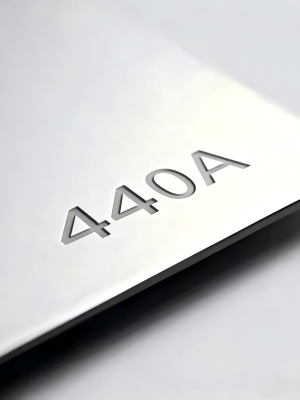
The essential difference between 440A and 440C lies in the graded carbon content, which fundamentally differentiates their internal microstructure and final mechanical properties, forming a clear performance hierarchy. As the low-carbon optimized version of the series, 440A has lower carbon content, which effectively inhibits the precipitation of excess hard carbides inside the matrix. The chromium element is distributed more uniformly, avoiding local chromium deficiency, so it maintains excellent comprehensive performance in toughness, impact resistance and medium corrosion resistance. After standardized heat treatment, the hardness of 440A is stably controlled between HRC 56 and HRC 58, with extremely small thermal deformation, no brittle fracture or edge chipping problems during operation. Its balanced toughness and wear resistance enable it to adapt to complex working conditions with both friction loss and vibration impact. With high processing fault tolerance and stable batch consistency, 440A is more suitable for mass production of general high-end wear-resistant precision components and is the most versatile grade in the 440 series.
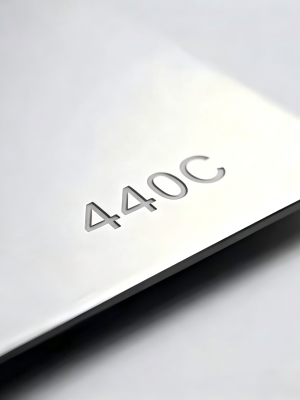
440C is the high-carbon top-grade model of the 440 series, with nearly twice the carbon content of 440A. The increased carbon element combines with chromium to precipitate a large number of uniformly distributed hard carbides, which greatly improves the surface hardness and extreme wear resistance of the material. After precise heat treatment, its hardness can reach HRC 58 to HRC 62, occupying the top level among commercial stainless steel balls in terms of wear resistance, anti-galling and anti-fatigue performance. It can stably cope with ultra-high load, long-cycle and high-frequency reciprocating friction extreme working conditions. However, the high-carbon formula reduces the material’s toughness and micro corrosion resistance to a certain extent, and the material is more sensitive to process parameters during processing and heat treatment, with higher manufacturing difficulty. Therefore, 440C is more targeted for static high-pressure, non-impact, high-precision equipment scenarios that pursue ultimate service life, and it is not recommended for humid, salt-spray and severely corrosive working environments.
In industrial material selection, there is no absolute distinction between good and bad 440A and 440C. The key is accurate matching according to actual working load, impact degree and service environment. As a professional high-end precision steel ball manufacturer, Feige Steel Ball realizes full-spec mass production of 440A and 440C stainless steel balls, with independent physical and chemical testing laboratories and complete precision testing equipment. We use spectrometers to verify material composition, high-precision hardness testers to calibrate heat treatment hardness, metallurgical microscopes to observe internal microstructure, and precision detectors to check spherical tolerance and surface finish. The whole process eliminates material mixing, unqualified heat treatment and dimensional deviation. Under the dual certification of IATF16949 and ISO9001 quality systems, we build a full-link closed-loop quality control system from raw material screening, parameterized heat treatment regulation to finished product full inspection and traceability, providing professional customized material selection solutions and high-stability 440-series ultra-wear-resistant steel balls for global high-end precision manufacturing industries.
Advantages of Carbon Steel Slingshot Balls in Material and Intelligent Manufacturing
420A vs 420B vs 420C Stainless Steel Balls: Differences, Properties & Applications
Related Article

Analysis of the Influence of Precision Steel Ball Surface Roughness on Bearing Service Life
This article elaborates the core material advantages of carbon steel slingshot balls in density stability, deformation resistance and cost performance, and analyzes the technical differences between high-precision finished products and ordinary products. It highlights Feige Steel Ball’s standardized production technology and rigorous full-index testing system, proving our capability to deliver stable, high-precision carbon steel slingshot balls for diverse outdoor shooting scenarios.
Advantages of Carbon Steel Slingshot Balls in Material and Intelligent Manufacturing
420 series martensitic stainless steel includes 420A, 420B and 420C grades with graded carbon content. They differ greatly in hardness, toughness and wear resistance. This guide helps you select the right 420 steel ball for precision wear-resistant industrial scenarios.
420A vs 420B vs 420C Stainless Steel Balls: Differences, Properties & Applications